Seasoned riders always grab polo wraps before a ride — and there's real science behind that habit, not just tradition. A horse's legs are engineering marvels, but also deeply vulnerable. Inside those legs sits a complex network of tendons, ligaments, and blood vessels. That network carries an 1,100-pound animal through jumps, sprints, and long trailer hauls every single day.
One misstep, one hard knock against a fence rail, one long haul without support — the consequences can sideline a horse for months.
New rider trying to figure out what your trainer is doing? Horse owner questioning whether boots and bandages are necessary? The answer is more layered — and more interesting — than you'd think.
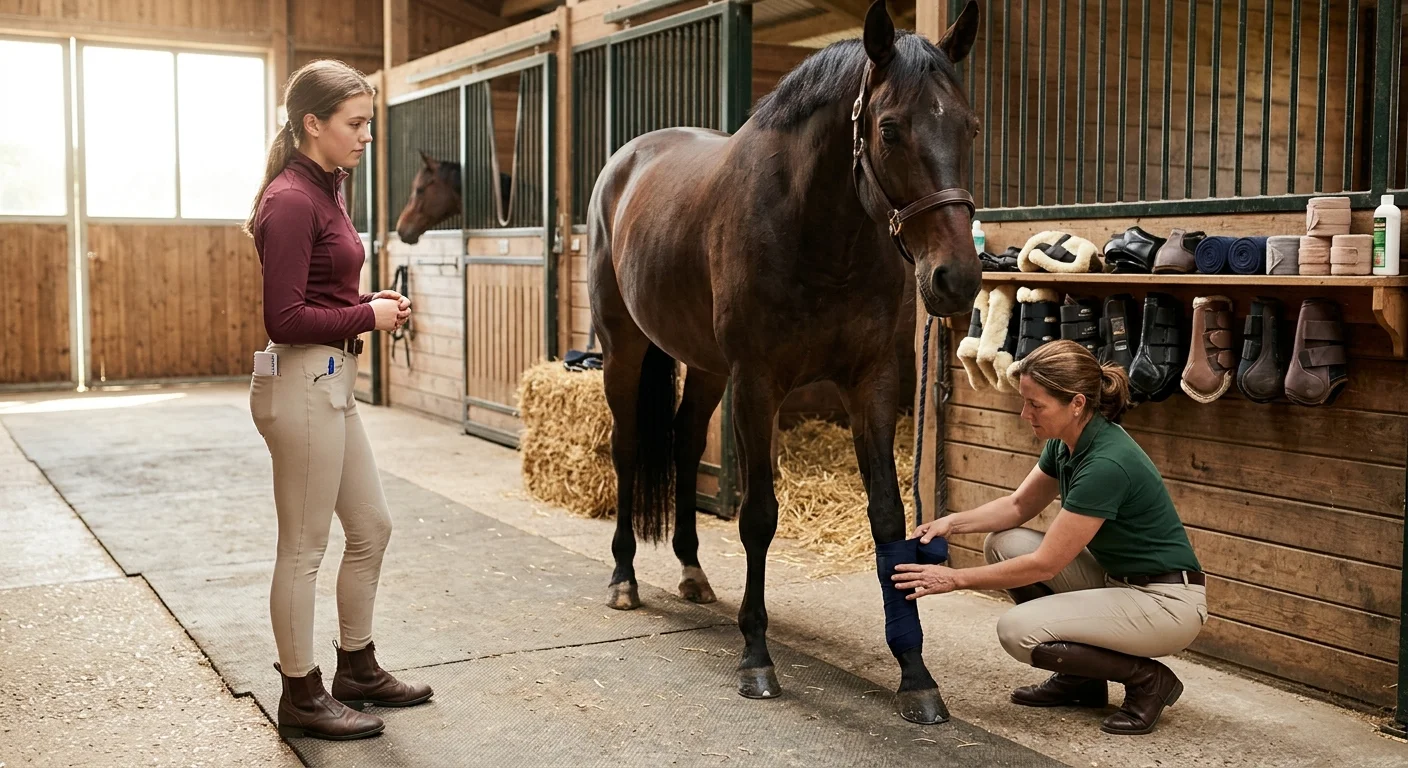
Wrapping a horse's legs isn't one thing — it's five different things, depending on the day.
The reason changes with the situation. A horse loading into a trailer has different needs than one recovering from a tendon injury. And a horse warming up in the arena has different needs again. Here's how it breaks down:
What Does Wrapping a Horse's Leg Do? (Core Mechanism Explained)
Here's the physics, plain and simple. A wrap creates external pressure that moves inward — through the skin and into the soft tissue beneath. That pressure builds until it matches the pressure inside your horse's blood vessels. Once they balance out, fluid stops leaking. Swelling never gets a chance to form. That's the whole mechanism — and it works.
The tendons carrying the real load — the superficial digital flexor tendon, the deep digital flexor tendon, and the suspensory ligament — handle a combined strain force above 1,000 kg at canter. At a jump, that number goes even higher. No wrap absorbs that force directly. What wrapping does is spread impact across a wider surface area. So if a hind foot clips a front tendon mid-stride, peak pressure drops across that zone instead of hitting one small, vulnerable spot.
Top equestrian clothing manufacturers and equestrian suppliers design their polo wraps and leg wraps with even pressure distribution in mind, helping you avoid dangerous tight spots while protecting your horse’s legs.
One more thing worth knowing: boots trap heat. Research shows a wrapped leg can hit 97°F within 15 minutes of exercise — versus 81°F on a bare leg. Polo wraps run the hottest, pushing humidity close to 94%. Prolonged heat slows tendon repair. That's why post-exercise monitoring matters just as much as the wrap itself.
Even pressure distribution isn't optional — it's everything. Uneven overlap creates pressure spikes that cut off blood flow. Those spikes work against healing, slowly and without any obvious warning signs.
For stables, training facilities, and retailers, wholesale equestrian clothing offers a cost-effective way to stock high-quality leg wraps. Many professional equestrian manufacturers also provide reliable, consistent products that meet both daily training and competition standards.
Reason #1: Protection from Cuts, Impacts, and Trail Hazards
A horse's lower legs have almost no muscular protection — just skin, bone, tendon, and a lot of vulnerability.
Training exposes that vulnerability to real hazards, again and again. Front legs knock against each other mid-stride (called brushing). Hind hooves clip the heel or coronet of a front foot during fast work (overreaching). Jump rails take a hit. Trail debris — sharp rocks, thorns, uneven ground — does quiet damage on every ride. None of these are rare events. They can all happen in a single session.
Wraps and boots are built to stop that damage before it builds up.Professional equestrian clothing manufacturers design protective gear with durability and precise fit in mind for all disciplines.
Different activities call for different protection:
Fit matters as much as boot type. A boot that shifts during movement gives no real protection. The standard rule: one finger should fit between the boot and the leg — no tighter, no looser. Too tight, and it compresses the tendon. Too loose, arena sand slips inside and turns your protective gear into something that rubs and irritates.
Equine fetlock protection and cannon bone wrapping follow a simple idea: spread the impact so it never concentrates on one small, exposed spot.
Reason #2: Tendon and Ligament Support During High-Intensity Exercise
A horse's lower leg tendons do something remarkable during a jump. They absorb and release forces greater than the horse's full body weight — all in a fraction of a second.
That load doesn't disappear. It moves straight into three key structures: the superficial digital flexor tendon, the deep digital flexor tendon, and the suspensory ligament. At a canter, combined strain forces top 1,000 kg. At a jump, even higher. Muscle has blood flow to help it recover. Tendon has almost none.
This is where wrapping becomes something more than habit.
What support looks like at speed:
Polo wraps and sports medicine boots stabilize the fetlock joint during sharp turns, high-speed gallops, and mid-air landings
Compression and rigid stays work together to limit fetlock hyperextension by 20–30%
That limit matters most in overreach situations — a hind hoof swings forward and risks forcing a front fetlock past its safe range
Research on human tendon analogs adds useful context. High-intensity resistance training over 12 weeks produced a 57.7% increase in tendon stiffness. So tendons under regular, managed load grow more resistant to strain. Lower-intensity training showed no significant change.
The takeaway for horses is clear: a conditioned tendon handles peak load better than a deconditioned one. Wrapping supports that process during exercise. It doesn't replace conditioning — but it cuts down on uncontrolled variables while the tendon is still adapting.
For stables, trainers, and retailers, wholesale equestrian clothing offers a cost-effective way to stock high-performance wraps and boots.
Many trusted equestrian suppliers also provide consistent, performance‑tested products for daily training and competition.
One boundary worth knowing: support is not treatment. A wrap during hard work helps manage load and joint stability in a healthy horse. A horse with an injured tendon needs a vet first. Rehab should build from low to high intensity — not skip straight to high.
Reason #3: Reducing Swelling and Managing Stocking Up
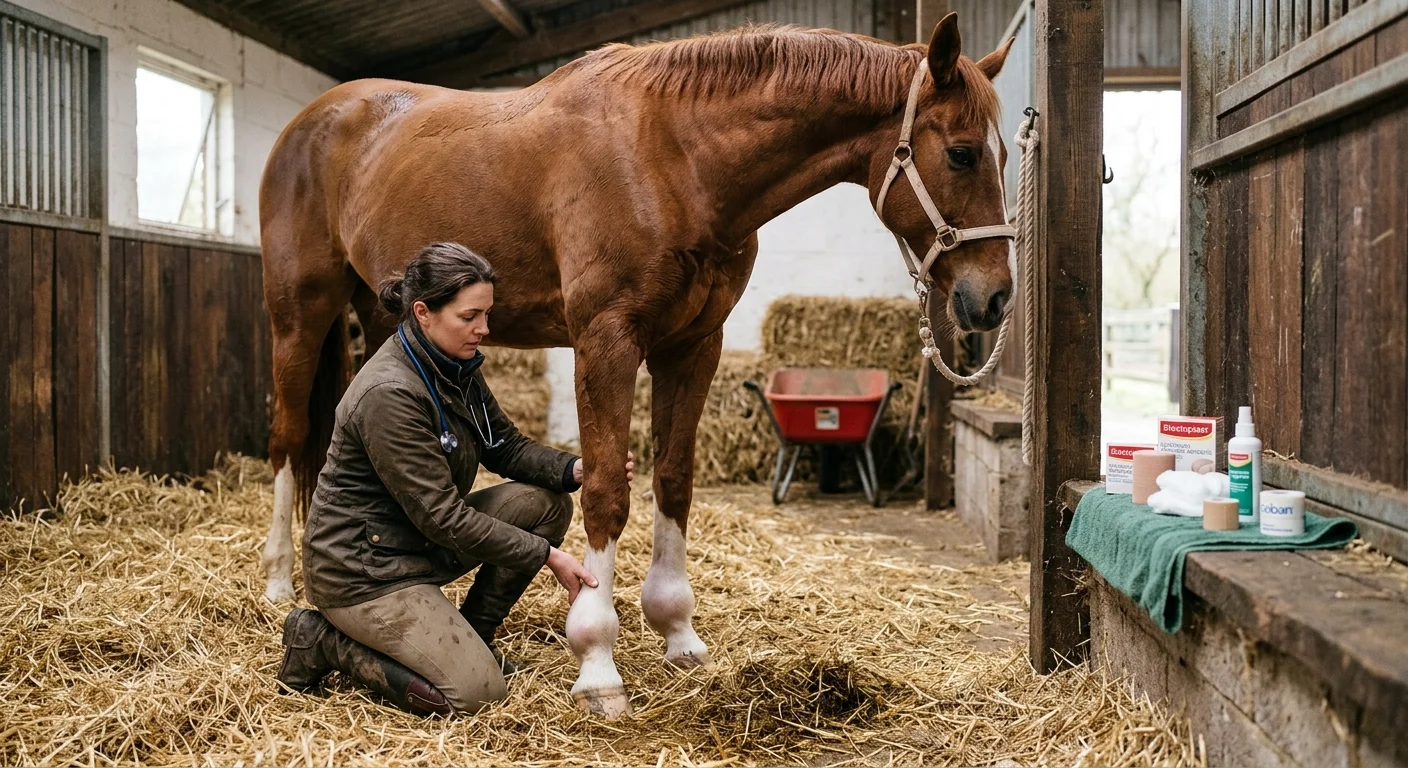
Horses standing still for long periods do something predictable and frustrating — their legs puff up.
It happens in trailers. It happens in stalls on rest days. It happens overnight after a hard session. Fluid pools in the lower leg because movement isn't pushing it back up through the lymphatic system. Riders call it stocking up. It looks dramatic, but it's mostly harmless — as long as you catch it early.
This is where equine standing bandages earn their place in every barn.
A bandage with gentle compression keeps fluid moving. It stops that pooling before the leg gets a chance to balloon. Think of it as a passive pump — working through the night while your horse rests.
What compression wrapping does for swelling:
Limits fluid buildup in the cannon bone and fetlock region
Cuts down existing puffiness — apply from the fetlock upward with consistent pressure
Supports the leg during trailer hauls, where long stillness is unavoidable
So get the layering right every time.
Swelling doesn't clear up after movement and wrapping? Call your vet. Persistent, uneven, or warm swelling points to something else entirely.
Reason #4: Promoting Circulation and Therapeutic Recovery
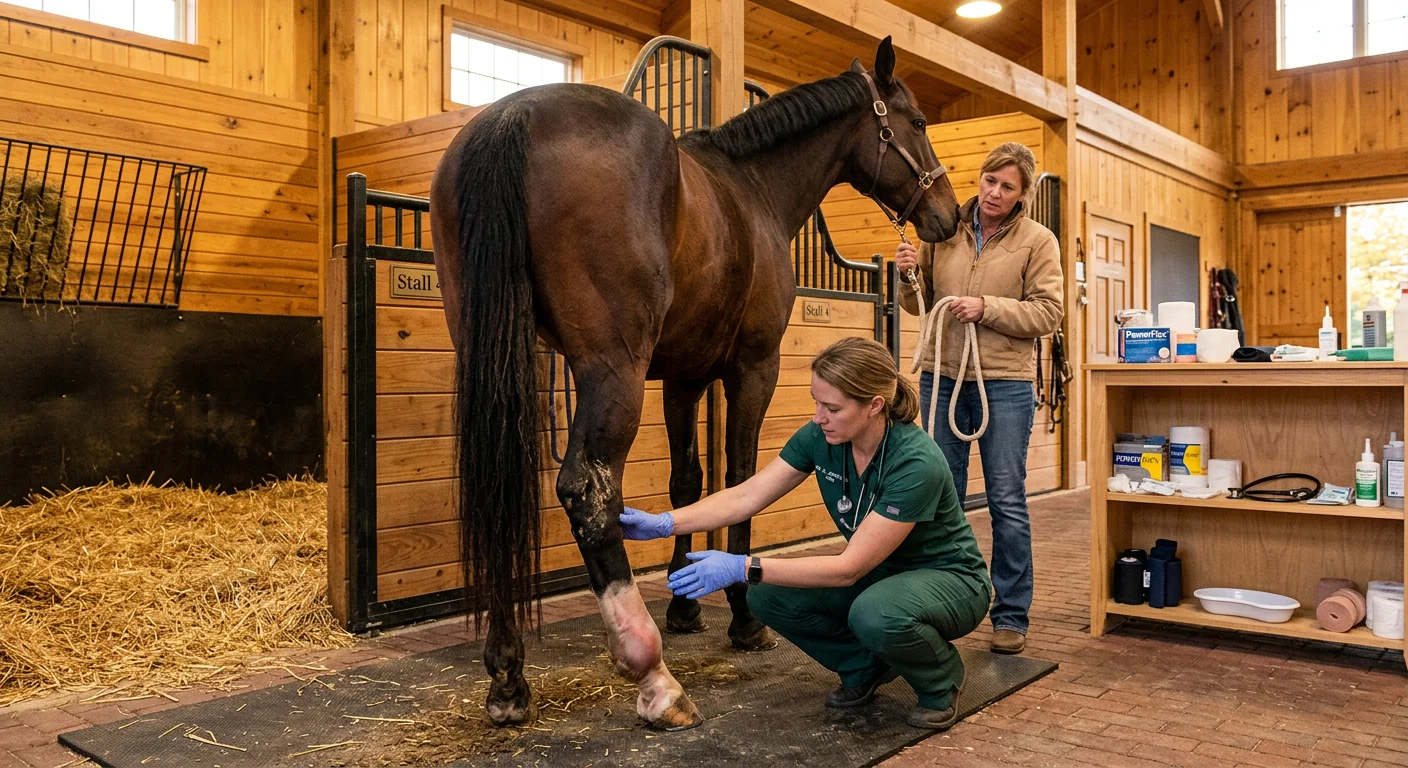
Recovery isn't passive. Your horse stands still in the stall — but the right bandage keeps working on the tissue underneath.
Therapeutic wraps — the kind built with ceramic fibers or magnetic technology, like Back on Track or Welltex — do something ordinary polo wraps cannot. Ceramic microspheres (2,000+ per cm²) absorb your horse's body heat. They reflect it back as far infrared radiation, reaching 1.5 to 5 cm into soft tissue. Local temperature rises 1–3°C. Capillaries open up. Blood flow increases by 20–50%.
Magnetic therapy takes a different path but hits the same target. Static fields between 500 and 3,000 Gauss shift red blood cell alignment. This drops blood viscosity by 10–20% and pushes oxygen delivery to inflamed tissue up by around 18%.
What that looks like in practice:
Add a ten-minute walk after each session. That boosts circulation gains by another 30%. Movement and therapeutic wrapping build on each other — they're stronger together.
Standard polo wraps give passive compression and a small 5–10% temporary flow boost. Therapeutic bandages deliver something clearly beyond that. The price reflects it: $50–150 per pair versus $10–30. Still, with proper care, therapeutic wraps hold up for one to two years — so the cost spreads further than it looks.
Reason #5: Keeping Legs Safe and Clean During Transport
Trailer loading is where a surprising number of leg injuries start — and most owners don't see it coming.
In crowded trailers, horses step on each other. That alone causes 15–20% of transport-related leg injuries. Long-haul vibration adds more stress — it raises joint pressure by 30%. Standing still for hours makes things worse. 40–60% of horses develop visible swelling after just four hours on the road. The trailer is one of the riskiest places for a horse's legs.
Shipping boots vs. standing wraps — here's the practical difference:
The simplest rule:
Short trips under four hours → shipping boots alone
Long hauls over four hours → standing wraps underneath, shipping boots over the top, with a 10-minute airing-out stop every four hours
That layered setup solves three problems at once. It stops heat from building up — trailer legs can run 10–15°C warmer than normal. It cuts down swelling. And it gives your horse real structural protection for the full trip.
How to Wrap a Horse's Leg the Right Way (And Mistakes That Can Cause Harm)
Bad wrapping isn't neutral. It doesn't just fail to help — it hurts. A bandage with the wrong tension, wrong direction, or no padding underneath can bow a tendon, cut off circulation, or create pressure sores that take weeks to heal. The wrap you put on to protect your horse becomes the thing that injures him.
So the technique matters. Every single time.
The Fundamentals Before You Start
Direction is non-negotiable. Wrap clockwise on the right legs, counterclockwise on the left. Always move front to back, outside to inside. Reversing this pulls the tendons forward under pressure. That's how wraps cause damage even when the tension feels fine.
Padding goes on first. Roll your quilt or cotton pad inside-out. Place the rolled portion against the back of the leg. Then unroll it toward the front. The end should tuck snug into the groove behind the cannon bone. No wrinkles. No ridges. A small fold creates a pressure point — and pressure points left overnight become sores.Reputable equestrian clothing manufacturers produce soft, even padding and polo wraps designed to avoid these risks from the start.
The Wrap Itself
Tuck the bandage end 1–2 inches into the quilt, midway down the cannon bone. From there, unroll with steady tension. Tighten over the front of the cannon bone only — never on the inside where the tendons run. Spiral down to the fetlock, leaving half to one inch of padding visible at the bottom. Then spiral back up, leaving padding visible just below the knee or hock.
Check the tension with your fingers. Two fingers should slide under the wrap at the pastern. One finger should fit at the top. Too snug at either point, and circulation drops.
Each layer should cover 50% of the one before it. Start or end over a joint, and the bandage loosens with every step your horse takes.
Mistakes That Do Real Damage
For stables and retailers looking to stock up, wholesale equestrian clothing provides reliable, cost-effective access to high-quality bandaging supplies.
Got an open wound on the leg? Place a Telfa pad over it before any padding goes on. For severe swelling, chronic tendon conditions, or any injury you're not sure about — call your vet before reaching for the bandage roll. Wrapping the wrong situation can hide symptoms and delay treatment that makes a real difference.
Working with trusted equestrian suppliers ensures you get consistent, safe materials for daily wrapping and competition use.
FAQ: Common Questions About Horse Leg Wrapping
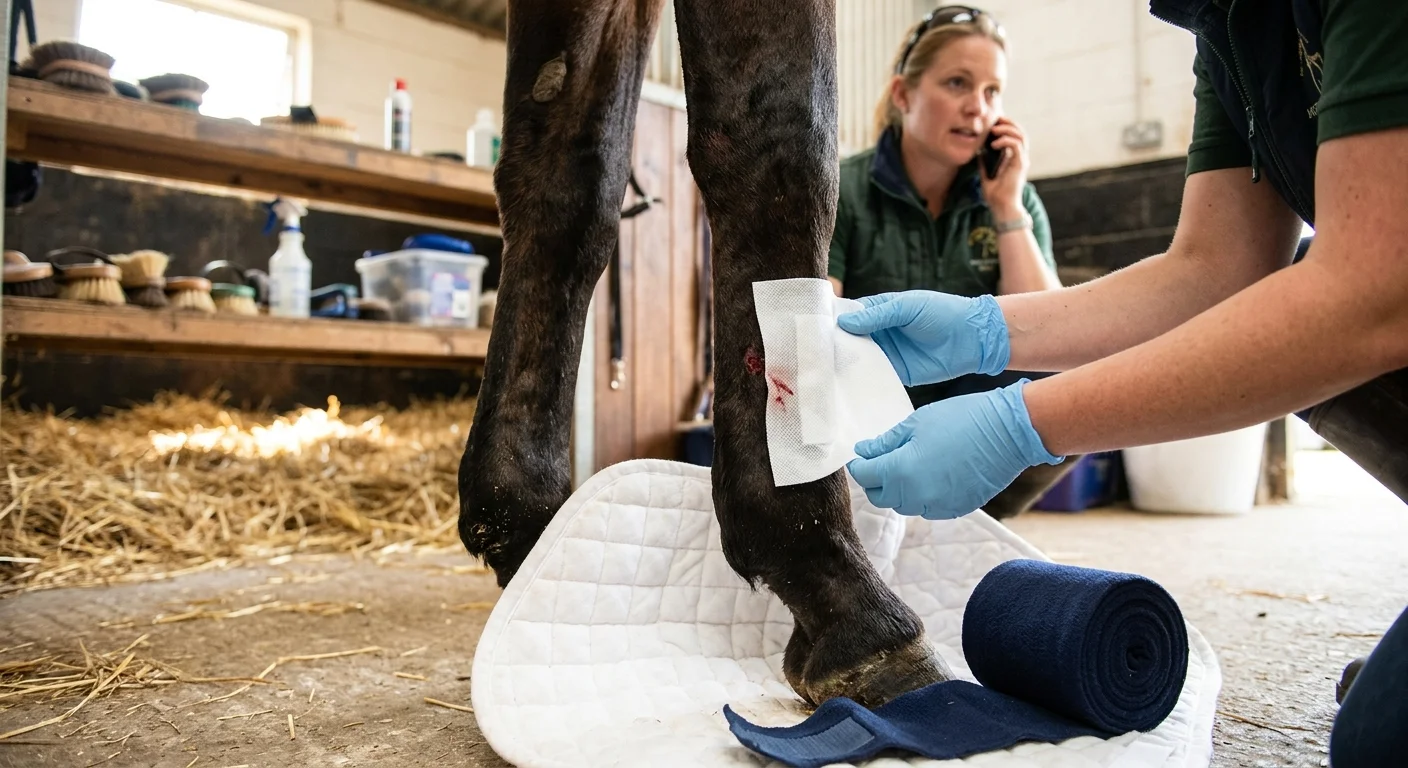
Even seasoned riders doubt themselves on this. Here are the most common questions — with straight answers.
Should I wrap my horse's legs every day?
No. Wrapping every day is not needed unless you're treating something specific — swelling, an injury, or post-workout stocking up. Standing bandages left on past 12 hours start cutting off circulation instead of supporting it. Wrap for a clear reason. Take them off once that reason is gone.
Can wrapping hurt my horse?
Yes — if the technique is off. Too much tension creates pressure points. Wrinkles in the padding push force into one small spot. Placing a bandage start or end over a joint makes it slip. Aim for a smooth, even "stovepipe" shape from top to bottom. Anything short of that, rewrap it.
How often should I check the wraps?
Check every two to four hours for slippage or bunching. Change them out after 12 hours at most. Take them off all the way each time — you need to see the skin underneath, not just fix the surface.
What supplies do I need?
Keep it simple:
- Padding — 10–18 inch quilts or cotton sheets
- Bandages — 4–6 inch fleece or elastic with Velcro closures
- Extras — liniment or poultice for swelling, clean dry towels before you start
Clean legs, proper padding, even tension. That's the whole list.
Video Guide: How to Wrap a Horse's Leg
Conclusion
Your horse's legs carry everything — every stride, every jump, every mile of trail. Wrapping them isn't a ritual or an afterthought. It's one of the most direct ways you show I'm paying attention to the animal in your care.
Grabbing horse polo wraps before a schooling session? Layering on standing bandages after a hard workout? Prepping for a long haul? The principle stays the same. Support the structures that do the most work. Do it before they tell you something's wrong.
Start simple. Pick one scenario — transport, recovery, or exercise. Learn that wrap well before moving on. A bandage applied with good technique takes two minutes. It can prevent weeks of stall rest.
Still figuring out which product fits your horse's needs? Browse our leg protection guide. The right wrap is out there. Your horse's legs are worth finding it.