Specialist riding boots cost hundreds — but you don’t need them to get started. You do need to pick your footwear carefully, though. The wrong shoes on a horse aren’t just uncomfortable. They can be dangerous.
There are real alternatives to traditional riding boots, no matter where you stand. Maybe you’re a beginner testing the waters. Maybe your old boots finally wore out. Or maybe you ride occasionally and don’t want a dedicated pair sitting untouched in the hallway. Many equestrian suppliers and equestrian clothing manufacturers now offer affordable, safe alternatives without compromising on quality. Good options exist for all of these situations — and so do bad ones you’ll want to avoid.
Here’s how to choose safe, practical footwear and still look the part, whether you buy off the shelf or turn to wholesale equestrian clothing providers for durable, budget-friendly pieces.
What Is An Alternative To Horse Riding Boots?
Three things matter for saddle footwear: heel height, sole grip, and ankle support.
A 1–2 inch heel is the baseline requirement — full stop. Without it, your foot can slide through the stirrup. That's how riders get dragged. Everything else is secondary.Many reliable equestrian clothing manufacturers offer well-designed styles that meet these safety standards while remaining affordable.
Your options within those safety boundaries are broader than you'd think:
Paddock boots — the most practical everyday alternative; solid for schooling and stable work
Half chaps paired with ankle boots — gives you tall boot coverage at a fraction of the cost
Chelsea boots — fine for light, casual riding as long as the heel is correct
Yard or mucking-out boots — suited to ground work, not riding
What doesn't work: trainers, flat-soled boots, sandals, or anything with an open toe. These aren't style judgements — they're safety ones.
The right choice depends on how and where you ride. A beginner taking their first lesson needs something different from a trail rider who goes out every week. Think about your riding context first, then match your footwear to it. For bulk or business orders, many also provide wholesale equestrian clothing solutions tailored to stable and riding schools.
Why Riding Boots Exist: The Safety Features Any Alternative Must Match
Riding boots were built around one uncomfortable truth: horses are unpredictable, and the ground is hard.
Every design detail — the heel, the smooth sole, the rigid shaft — exists because someone learned what happens without it. Knowing that history helps you judge any alternative with clear eyes.
The Three Features That Matter
A 1–1.5 inch heel stops your foot from sliding through the stirrup. Foot slips through, you fall — and you don't just fall. You get dragged. That's not a preference. It's non-negotiable.
Riding boot soles are smooth by design. That smoothness lets your foot release from the stirrup in a fall. Thick rubber lugs, deep tread, or exposed lacing can catch and grip at the worst possible moment.
Studies show knee-high boots cut ankle and foot fracture risk by 57% compared to lower footwear. The rigid shaft limits twisting and crushing force. So when a hoof comes down or a fall goes sideways, your ankle has real protection.
What the Numbers Show
The data on wrong footwear is clear. Riders in shoes or sandals suffer lower-limb injuries at around 55%. Riders in proper boots? That rate drops to 47%. The gap gets bigger with falls — riders without boots face close to double the risk of open lower-leg wounds.
Full-grain leather beats synthetic materials on abrasion resistance. Stitched soles hold better than glued ones. Armoured boots — with toe, heel, and ankle plating — can cut open wound injuries by up to 90%.
These aren't numbers from professional competitors. They apply to anyone in a saddle.
Paddock Boots — The Closest Functional Alternative to Tall Riding Boots
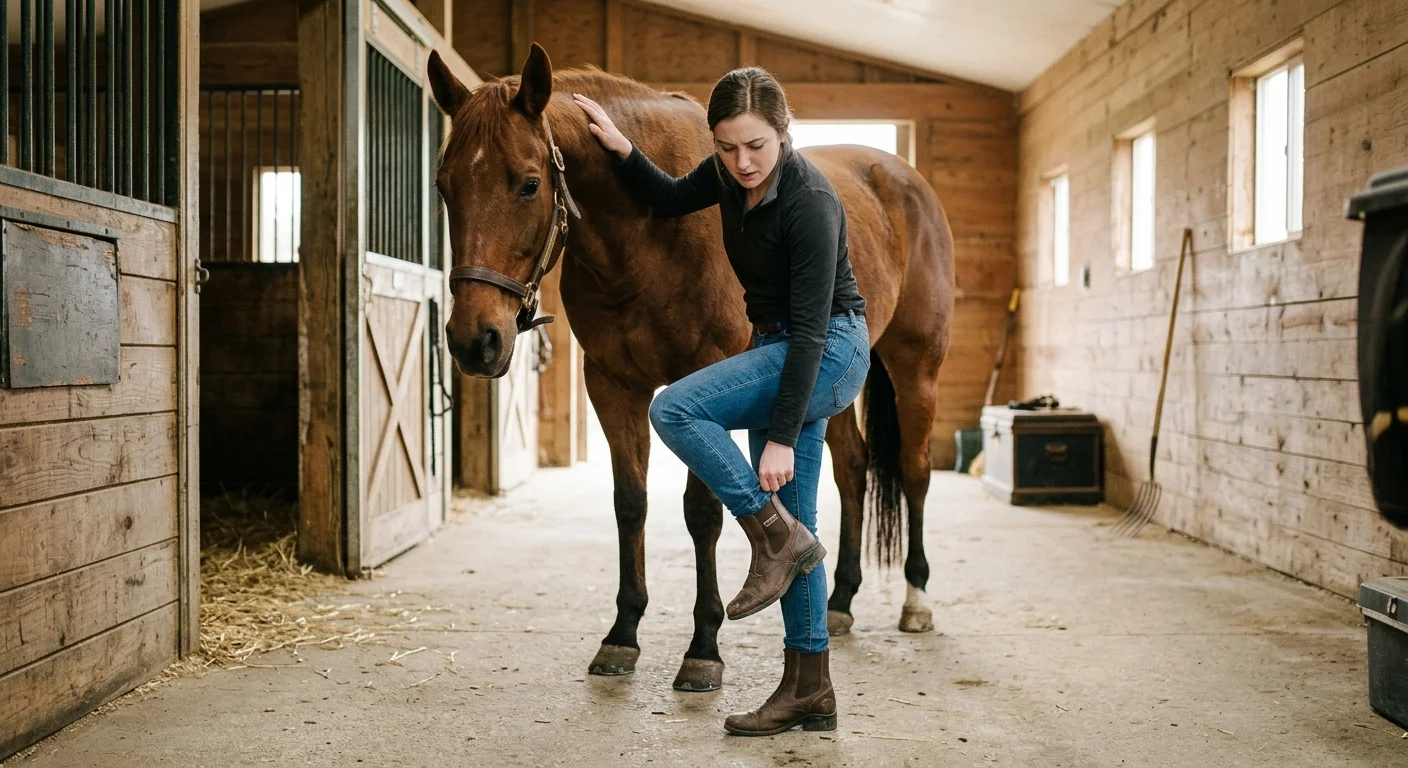
Paddock boots solve a problem most beginner riders don't see coming. You need proper riding footwear, but tall boots are expensive. And you're not even sure you'll stick with riding yet.
These ankle-height boots come with a proper heel, a smooth sole, and real ankle support. You can find them in zip-up, lace-up, or pull-on versions — leather or synthetic, black or brown. They break in faster than tall boots. Fitting them is simple too — no calf measurements, no custom sizing headaches. Plus, they cost far less. For someone just starting out, that combination is hard to beat.
What They Cover — And What They Don't
Paddock boots do the core job well. They're stable underfoot and practical enough for yard work and schooling sessions. You can wear them all day at the barn without your feet giving out. Put them on for morning mucking out, keep them on for your afternoon lesson — they hold up across both without issue.
The one gap is lower leg protection. Without a rigid shaft, your calf and shin are left open in a way tall boots aren't. Half chaps fix that gap. Pair them together and you get the coverage and look of tall boots — at a much lower cost. Most everyday riders use this combo for exactly that reason.
Where Paddock Boots Work Well
Beginner and children's lessons — the go-to starting point, low cost, easy to find
Daily schooling and training at home — many experienced riders save their tall boots for shows and school in paddocks instead
Stable and yard work — more practical than tall boots for non-riding tasks
Casual and trail riding — more than enough for relaxed, non-competitive outings
There is one real limitation worth knowing: formal competition has stricter rules. USEF Eventing requires tall boots at all competition stages. USEF Dressage standards at levels 2–4 mandate plain black tall boots during tests. Paddock boots, even paired with half chaps, won't meet those standards in the ring.
A dual-boot strategy is what many riders settle on over time — paddock boots for everyday training, tall boots kept for the show ring. This approach extends the life of your tall boots, keeps them show-ready, and lets your paddock boots take the hard, regular wear they were built to handle.
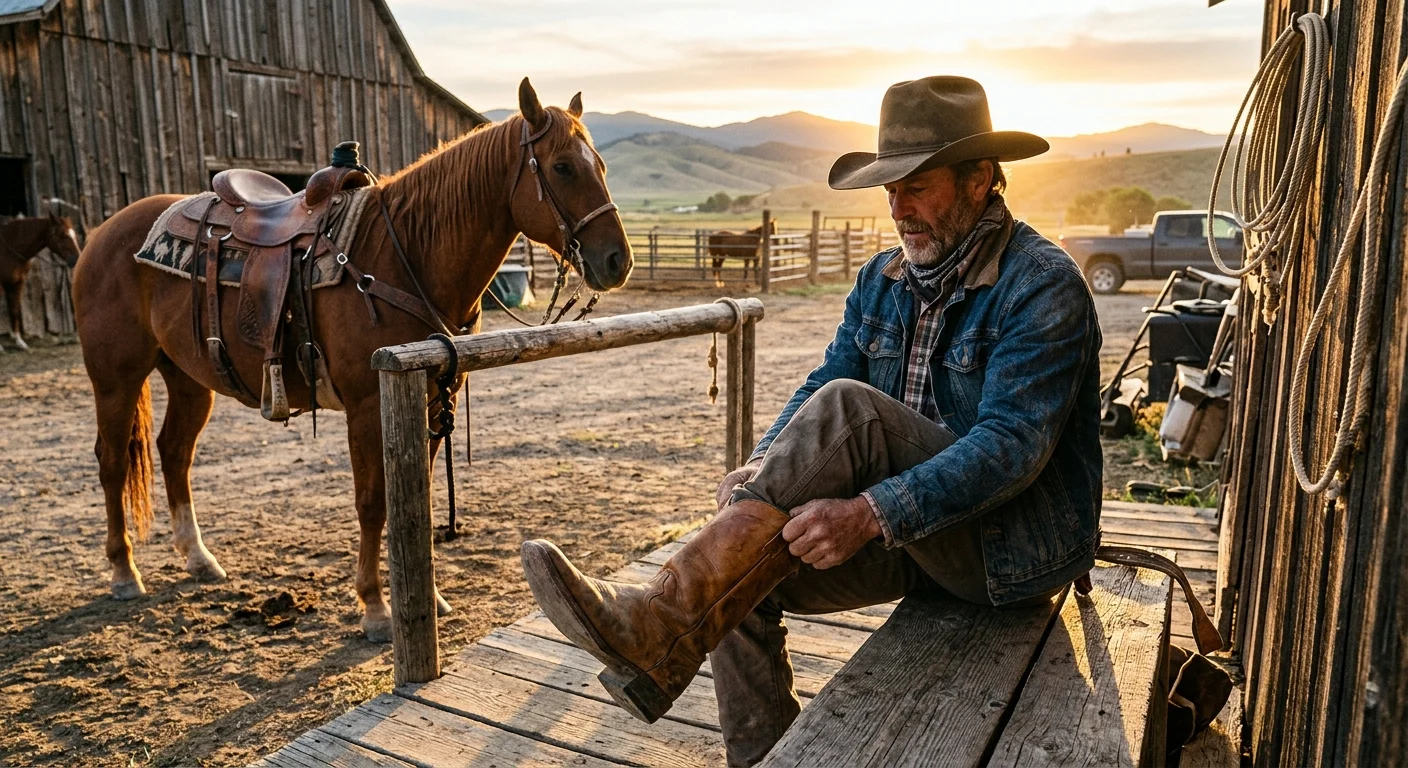
Western/Cowboy Boots — A Legitimate Alternative for Trail and Casual Riding
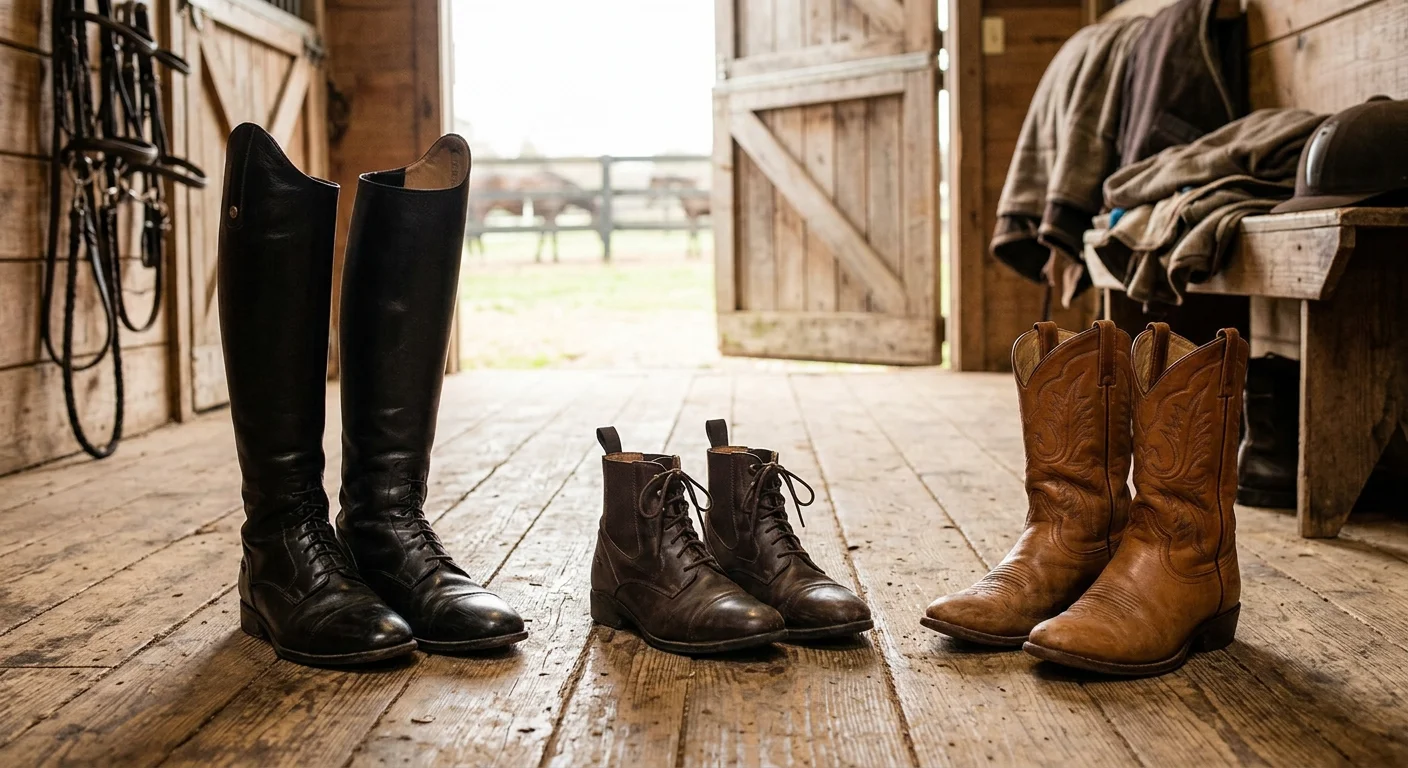
Cowboy boots weren't designed for fashion. They were built in the 1870s for riders spending 10 to 12 hours a day in the saddle. These were people who needed their feet to stay put and their legs protected from brush, rope, and rough ground.
That origin story matters. The core safety requirements are already built into the design.
Why the Design Works
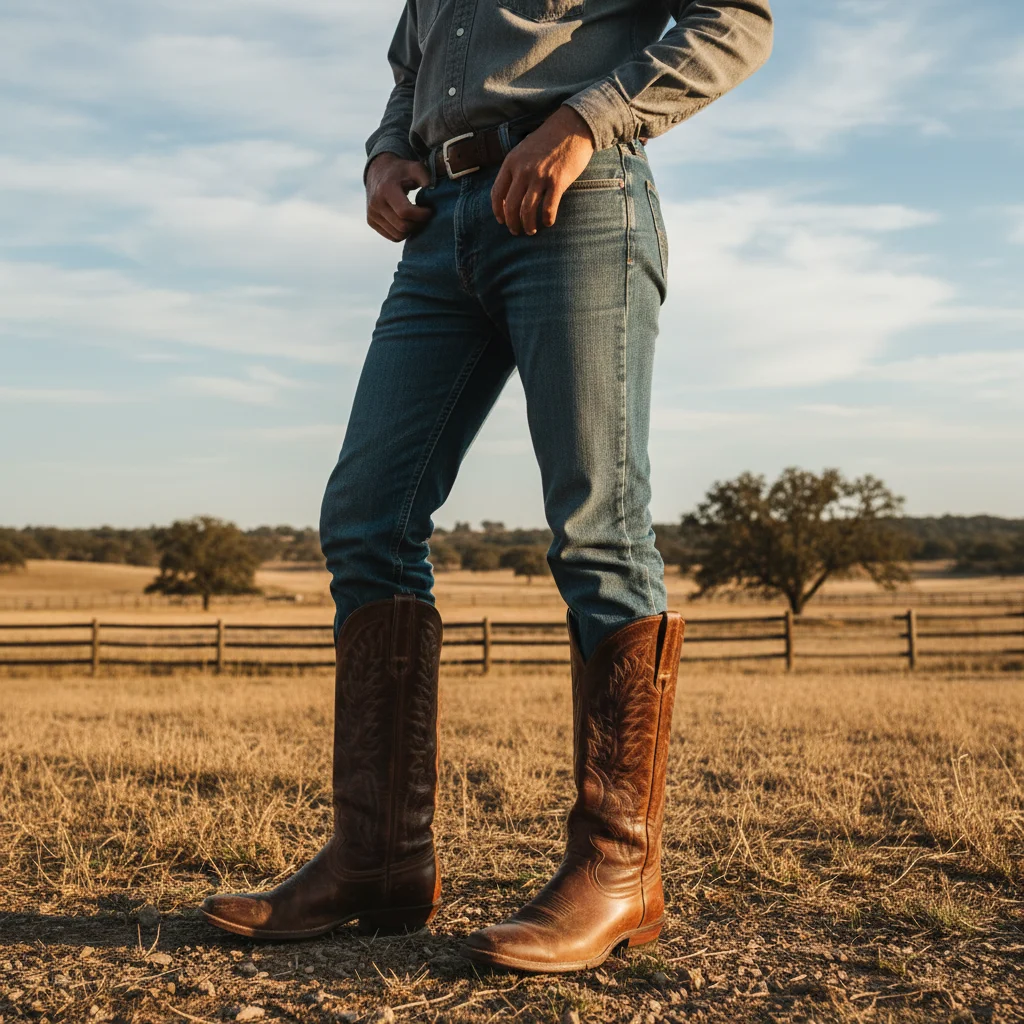
The heel on a cowboy boot runs 1.5 to 2 inches high and sits at a slant. That angle does two things. It holds your foot in the stirrup during the ride. It also lets your foot release if you fall. The smooth leather sole handles the second part — no deep tread to catch, no lug pattern to grip at the wrong moment.
The high shaft adds another layer of protection. It braces your ankle and shields your lower leg from trail hazards. On longer rides, it keeps thorns and brush away from your skin.
For trail riding, casual outings, and farm work, that's more than enough.
Roper vs. Classic Cowboy — Know the Difference
Not all Western boots ride the same way.
Classic cowboy boots — tall shaft, angled heel, narrow pointed toe — are built for long hours in the saddle. The pointed toe slides right into stirrups. The heel locks your foot in place.
Roper boots carry a lower shaft, a rounded toe, and a lower 1-inch heel. They're less dramatic in silhouette but more forgiving across a full day's work. You get less fatigue, easier walking, and they're still safe to ride in.
Pick based on what your day looks like. A full day in the saddle calls for classic cowboy boots. Mixed days of riding and walking lean toward ropers.
What to Expect to Pay
Entry-level to mid-tier Western boots run $80 to $300+. Some strong options in that range:
One honest note: cowboy boots are a great fit for Western-style trail riding and leisure rides. They don't transfer to English riding or formal equestrian settings — the heel geometry and toe shape don't suit English stirrup irons. For casual riders and trail enthusiasts, though, the fit is natural, the history is real, and the safety credentials hold up.
Chelsea Boots — The Urban Alternative That Actually Works for Light Riding
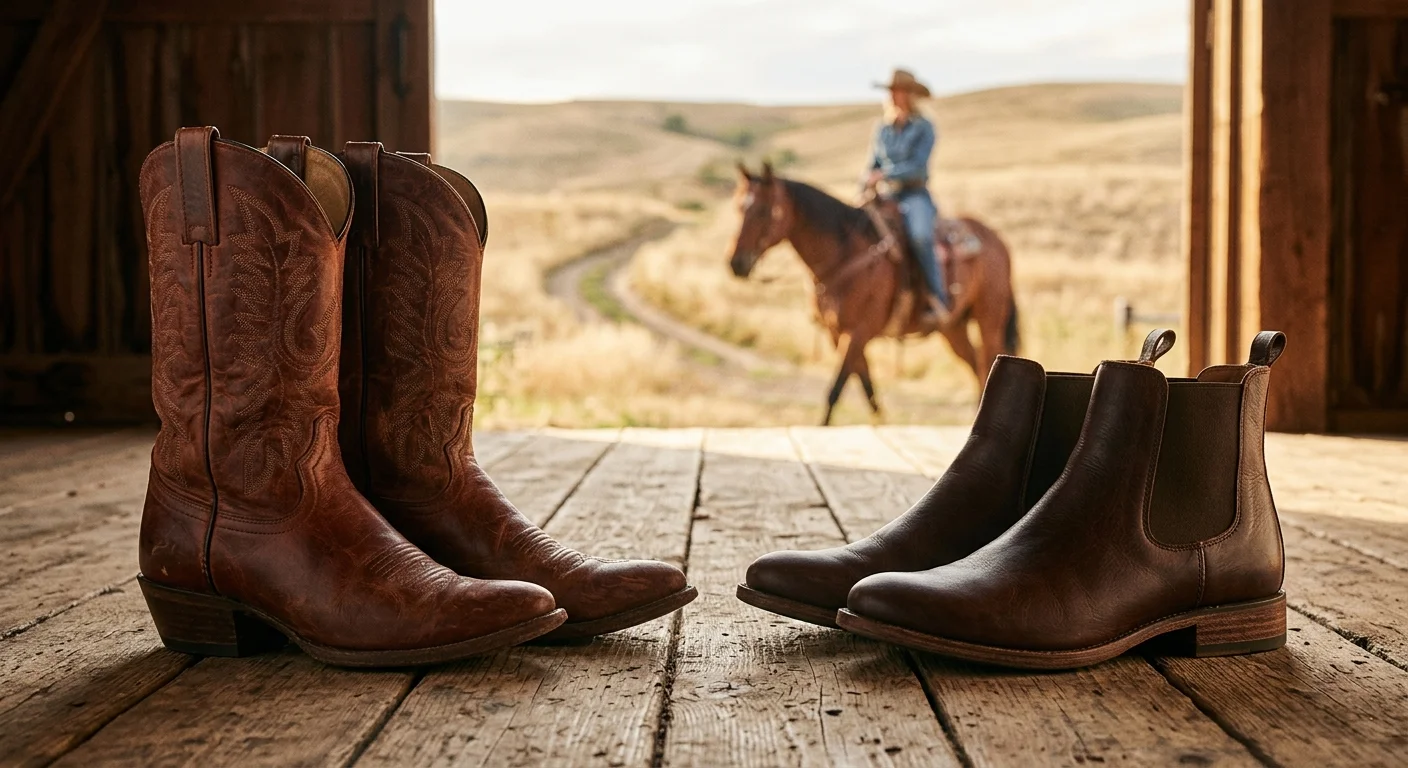
Most people don't know Chelsea boots started as riding footwear. Victorian equestrians wore elastic-sided ankle boots back in the 1850s — long before city dwellers claimed them. That history matters. It means the core design was built for the saddle from day one.
The design holds up well for light riding today. The elastic side panels wrap the ankle firmly, keeping things stable without creating pressure points. The heel — a 1 to 1.5 inch stack — lands in the right range for stirrup safety. A leather sole slides in and out of the iron cleanly, exactly the way a riding sole should.
That said, Chelsea boots have real limits. Know them before you ride.
- Dry indoor arenas and short leisure rides under an hour
- Light casual handling and horse interaction on stable ground
- Situations where you need style and function to overlap — urban-to-trail transitions, for example
- Wet or muddy terrain — leather soles soak up water fast and offer almost no grip
- Longer sessions — with minimal toe and heel reinforcement, fatigue and risk build quickly
- Any competitive or professional setting
Shopping with riding in mind? Go for full-grain leather soles over thick rubber. Rubber outsoles grip city pavement well, but the tread depth gets in the way of clean stirrup entry. Keep the heel between 1 and 1.5 inches. Check that the elastic gussets are wide enough to hold firm without slipping. Also look for Goodyear welted construction — it holds up over time, and you can resole it later.
Chelsea boots won't replace proper equestrian footwear. For occasional, low-intensity riding on forgiving ground, though, they're a far more solid option than most riders expect.
Work Boots and Hiking Boots — What They're Good For and Where They Fail
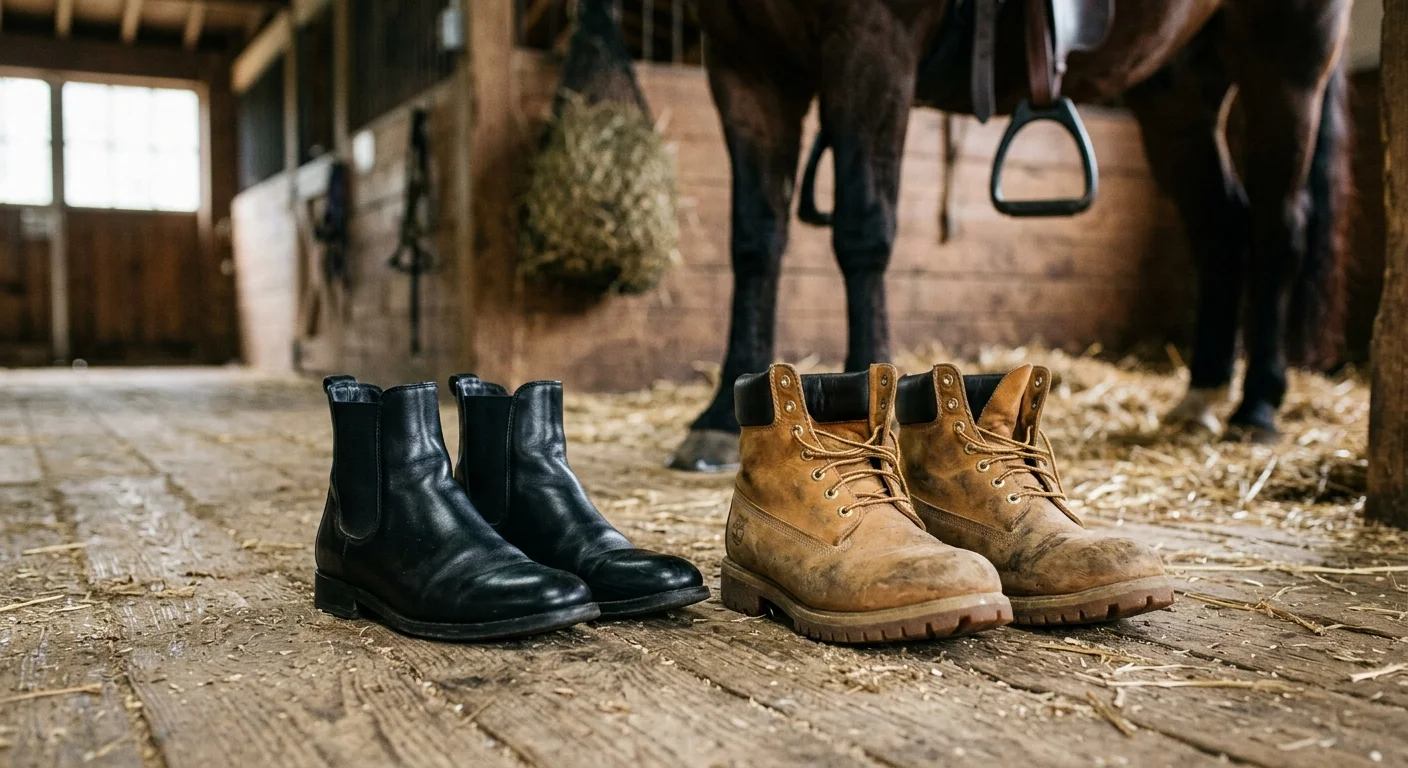
Slip on a pair of sturdy Timberlands before heading to the barn and you'll feel ready. That feeling is wrong.
Work boots and hiking boots look capable. They are capable — just not for riding. Those same features that make them great at their real jobs turn into liabilities the second your foot goes into a stirrup.
The Sole Problem
Work boots are built to grip. That's the whole point. ASTM-certified safety boots resist compression up to 2,500 pounds and impact up to 75 pounds — built for construction sites, not saddles. Thick rubber outsoles with high-traction tread patterns do one thing on a stable floor: they grip. Hard. And they don't let go.
That's the real danger. Your foot needs to release from the stirrup fast if you fall. A grippy lug sole blocks that. Rider forums say the same thing over and over — work boots get praised for ankle support in yard work, then the very next comment reads "sole too sticky, almost got my foot caught in the stirrup." That near-miss is the warning you shouldn't ignore.
Hiking boots carry the same risk, only worse. Aggressive sawtooth lug patterns — often 1–2 cm deep — snag on metal stirrup irons with almost no force at all. Competitive English riding bans them outright for this reason. Smooth soles are a hard rule, not a style preference.
Where These Boots Do Help
Both boot types have a real place at the barn — just not in the saddle.
Mucking out stalls, grooming, and ground-based stable work? A solid work boot earns its keep there. The ankle support and durability are genuine assets on barn floors. Keep them there, away from stirrups.
- Sole lugs must stay under 0.5 cm — test stirrup release before any contact with a horse
- Stick to flat, dry barn floors
- Never mount in either boot type
For riding, switch to paddock boots. The smooth sole isn't about looks. It's what keeps your foot from getting trapped.
Rubber/Wellington Boots — The Best Alternative for Yard Work and Wet Conditions
Wellington boots fit the barn the way rain fits autumn — they just belong there. No debate needed.
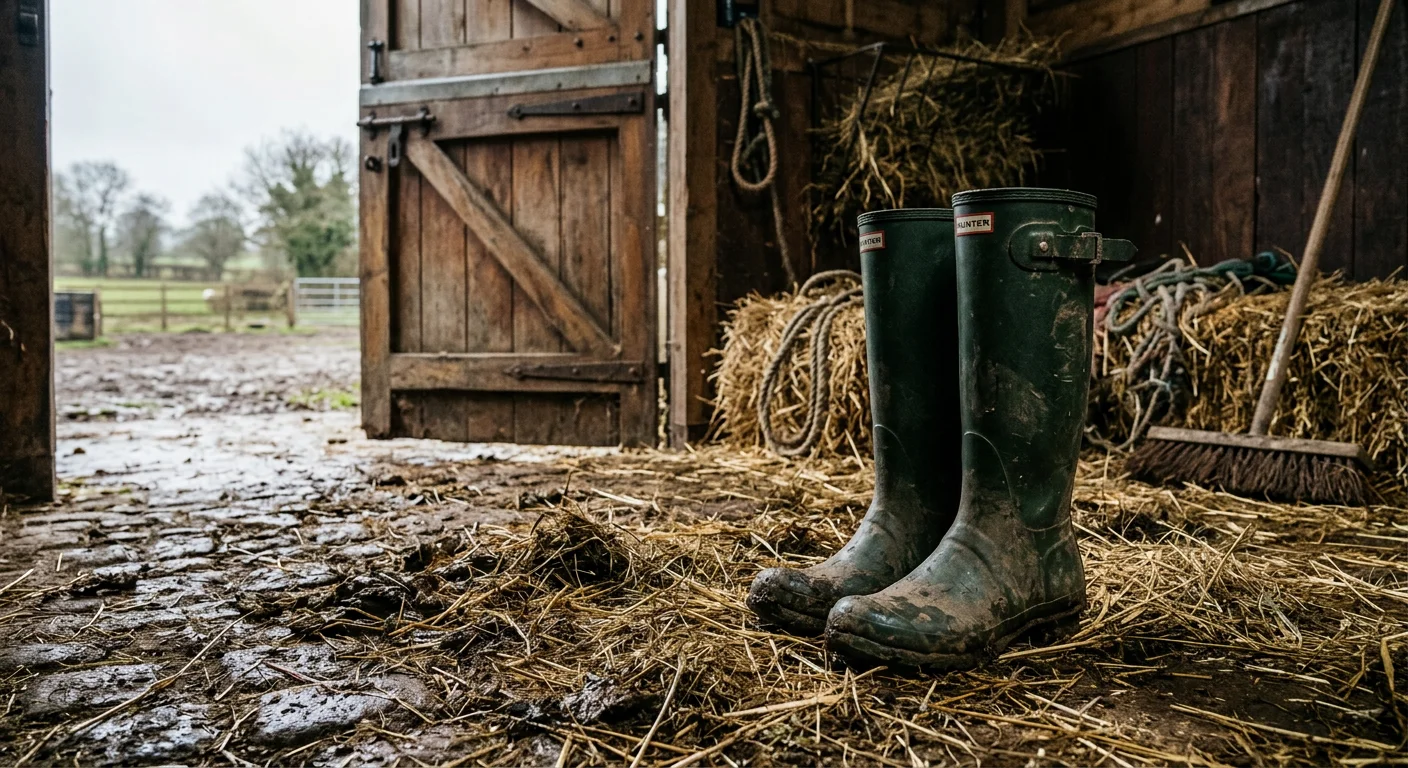
98% of the agricultural workforce wears them. That number isn't marketing. Generations of farmers field-tested these boots because they couldn't afford footwear that fails. You pull them on fast, hose them off in seconds, and they hold up to the kind of daily punishment that destroys most other footwear. Mucking out stalls, hosing down surfaces, slogging through wet paddocks before breakfast — wellies handle all of it without complaint.
That flat sole is their greatest strength for stable work. Put your foot in a stirrup, though, and it becomes a real danger. No heel. No tread angle. No safe release point. Don't ride in them.
Within their proper domain, these options are worth knowing:
One honest caveat: breathability is low. Full rubber in summer heat gets uncomfortable fast. Long hours outside in warm weather? Budget for a good insole and accept that trade-off going in.
For wet ground, manure, and barn-level work, wellies are the right tool. Just know where their usefulness stops.
FAQ: Common Questions About Horse Riding Boot Alternatives
These questions come up all the time — and they deserve straight answers, not vague reassurances.
Can you ride in sneakers?
No. Sneakers have no defined heel. Your foot can slide straight through the stirrup. That's not a minor inconvenience — it's how riders get dragged. Paddock or jodhpur boots start at $50–$150 and fix this problem for good. Many trusted equestrian clothing manufacturers offer reliable entry-level models at this price range.
Are hiking boots safe for riding?
They aren't. The thick, treaded soles that work great on a hillside become a trap in a stirrup iron. Grip that won't release — that's the real danger. Stick to paddock boots with a smooth sole. Entry-level options from around $150 give you genuine ankle support without the risk.
Can cowboy boots replace riding boots?
For Western trail and casual riding, yes. For English disciplines, no — the heel geometry doesn't suit English stirrup irons. About 38% of recreational riders reach for cowboy boots on the trail. Pair them with half chaps for added leg coverage.
What's the minimum heel height that's safe?
Between 0.5 and 1 inch. Below that, your foot has no reliable anchor in the stirrup during a fall.
Paddock boots or tall boots for beginners?
Paddock boots, every time. They run 20–30% cheaper — $100–$250 versus $300–$600+ for tall boots. They break in within one to two weeks. You can use them for lessons and yard work with no issues. Add half chaps for $20–$50 and you get tall-boot coverage at a fraction of the price. Save the tall boots for the show ring — if you get there. For riding schools and stables looking to stock up, wholesale equestrian clothing from professional suppliers is a cost-effective choice.
Conclusion
The right boot doesn't need "equestrian" printed on the label. It just has to keep you safe in the saddle. Chelsea boots for a casual trail ride? Good choice. Paddock boots for everyday yard work? Solid option. Rubber wellies for a muddy morning muck-out? They work too. The golden rule stays the same no matter what: heel, grip, and ankle support come first.
New to riding? Don't feel pressured to buy full equestrian footwear before you've found your rhythm. Smart alternatives exist. You now know which ones are worth grabbing — and which ones to leave by the door.
Ready to take the next step? Browse our curated guide to equestrian footwear essentials at RunEquestrian.com and find the perfect fit for your riding journey.
The best ride starts long before you mount — it starts with what's on your feet.