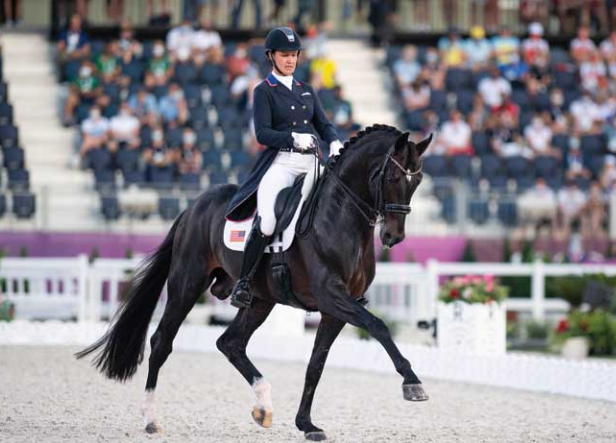
You've scrolled past it on social media—teenagers galloping through arenas on stick horses with the same intensity as Olympic equestrians. They complete jumps, dressage moves, and legit-looking competitions. Your first reaction? Confusion mixed with "Wait, is this real?" Spoiler alert: it is, and it's way more serious than you think.
Hobby horsing has evolved from a quirky Finnish pastime into a recognized athletic activity. It now has official championships, strict judging criteria, and a passionate community. Interestingly, the dedication to appearance in this sport is rivaling traditional disciplines, with many participants seeking gear that looks as professional as goods from top equestrian suppliers. Maybe you're a skeptical parent wondering if this is worth your kid's time, or someone intrigued about joining yourself. This guide breaks down why thousands of athletes take stick horse sport as seriously as any other competitive discipline.
What Is Hobby Horsing? Core Definition and Sport Recognition
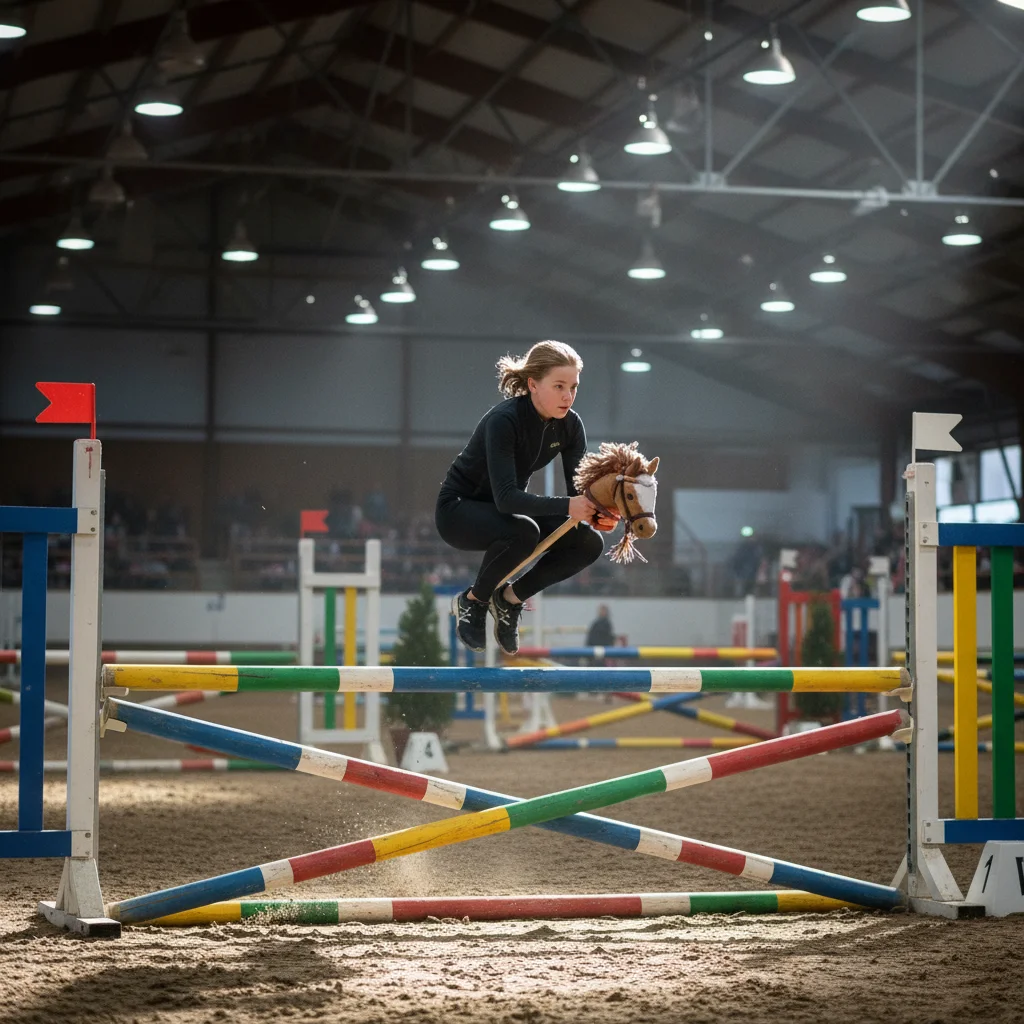
Hobby horsing is a competitive sport where participants use a toy horse head mounted on a stick to mimic equestrian events—no real horse needed. Athletes control all movements with their own bodies, running courses, clearing obstacles, and performing dressage patterns. The Cambridge Dictionary confirms this counts as a sport: it requires physical effort, skill, and follows set rules. The stick horse sport includes several recognized events like show jumping, dressage, Western horsemanship, and even puissance (high jumping).
Hobby horse athletic activity demands real physical fitness. Athletes sprint between obstacles, balance on one leg for dressage movements, and clear hurdles repeatedly. The effort matches track and field events. Strength, agility, and coordination separate beginners from competitors. While critics may dismiss it as childish, the Finnish hobby horsing community proves otherwise with thousands of dedicated athletes. Furthermore, the barrier to entry is low. Real horses cost thousands, but equestrian hobby sport needs just a stick horse and space, opening hobby horse riding to people who love horses but can't access traditional equestrian suppliers or afford livestocks.
History: From Finnish Pastime to Global Phenomenon
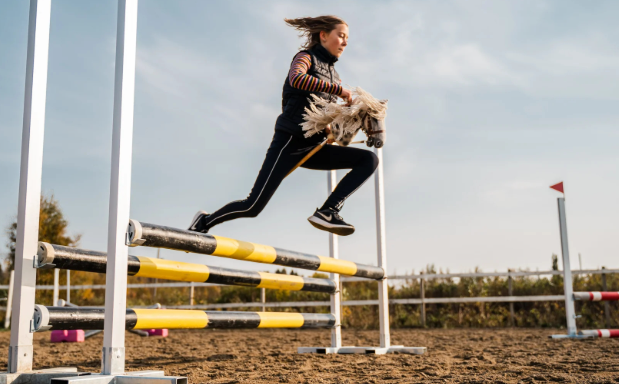
Finland created this movement by accident in the 2010s. What started as teenage girls galloping with homemade stick horses turned into organized chaos. By 2017, the Finnish National Championship pulled in around 200 competitors—young women who trained hard in hobby horse dressage and hobby horse jumping. Today, Finland boasts 10,000 active participants.
A massive catalyst was the 2017 documentary Hobbyhorse Revolution, which showcased the gymnastics-level athleticism involved. The world saw that this wasn't just play; it was a subculture with its own demand for specialized gear, leading some to seek custom equestrian apparel to stand out in the arena.
Now, the sport has gone global. Australia held its first national championship in 2024, and the USA runs annual US Hobby Horse Championships. The International Hobbyhorse Federation (IHHF) is even scheduling European Championships. As teams form, the need for uniform looks has increased, with clubs occasionally looking into wholesale equestrian clothing options to outfit their squads professionally. American competitions have even added Western disciplines like barrel racing, blending traditional stick horse culture with new styles.
Competitions, Disciplines, and Official Rules
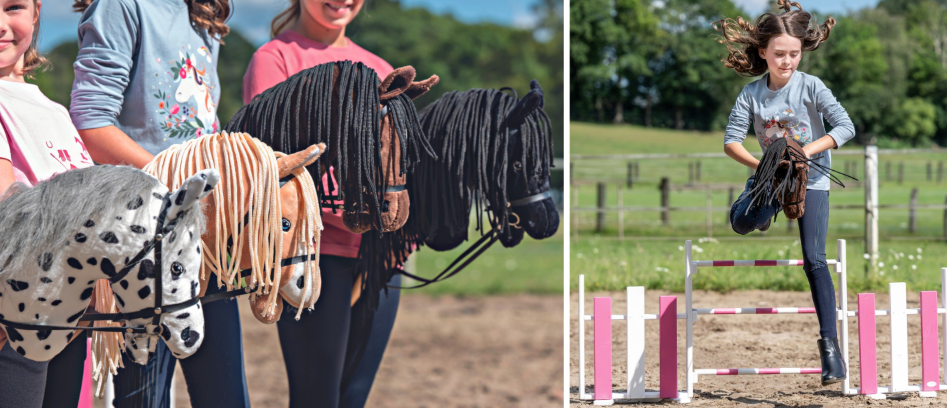
The competitive side is structured similarly to traditional equestrian events, often using scoring sheets that would look familiar to established horse riding clothes manufacturers and judges. Hobby horsing championships feature age divisions, skill levels, and certified judges.
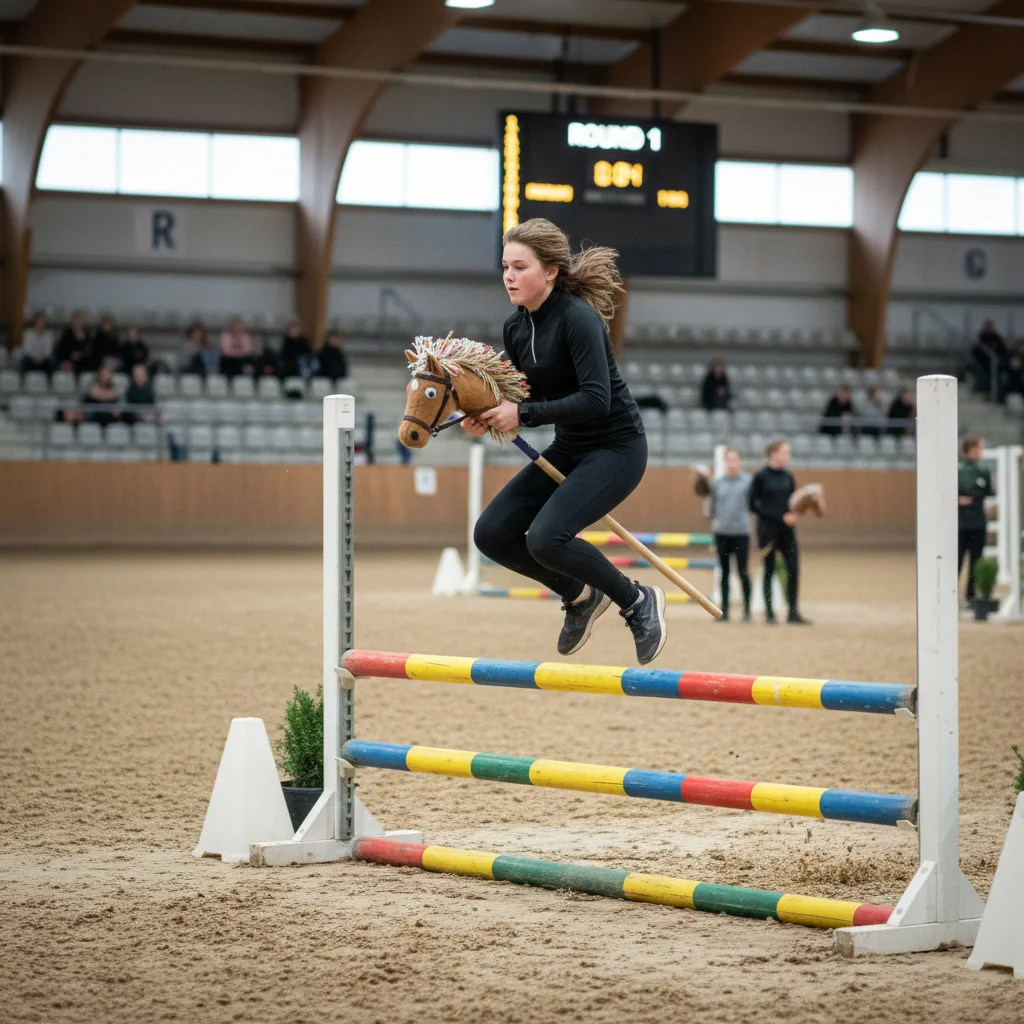
Show Jumping is where physics meets coordination. Athletes navigate courses with vertical jumps and oxers. Judges track fault points for knocked rails or refusals and time the course. It’s not just about speed; body control during takeoff and landing is crucial. Dressage demands precision. Hobby horse dressage mimics classical movements like piaffe and passage. Judges score rhythm, body control, and artistic flair. The elegance required here often inspires participants to wear outfits reminiscent of high-end custom equestrian clothing.
Equipment: Stick Horses and Rhythm
Real horses need saddles and vet bills; your stick horse needs significantly less, but the gear scene is growing. 95% of competitors use handmade hobby horses, often crafting them to look realistic. However, the rider's gear is becoming increasingly professional. Competitors wear sturdy trainers, riding breeches, and often jackets that look like they came straight from custom equestrian apparel catalogs.
The Hobby Horse essentials include a stick (usually 31-39 inches) and a head with foam padding. Competition-ready horses need proper halters and bridles. Serious competitors add browbands with crystals or "competition ears" to pop in the arena. While you don't need a real horse, you do need to look the part. Wearing proper breeches and gloves—gear typically produced by horse riding clothes manufacturers—demonstrates respect for the sport and improves grip and movement.
For the setup, jumping sets with lightweight poles are standard to prevent injury. Dressage arenas are marked with letters just like the real thing. The investment is reasonable: a well-equipped hobby horse costs under $200, a fraction of what you'd spend at traditional equestrian suppliers for tack.
Hobby Horsing vs. Real Equestrianism
One requires a barn; the other needs a closet. But the differences go deeper. Real horseback riding involves a 1,200-pound animal and statistically high injury rates. Hobby horsing has zero documented hospitalizations from animal behavior—because the "animal" is stuffing and wood.
- Zero animal-related injuries
- Full setup under $200
- No barn, vet bills, or board fees
- Controlled athleticism & creativity
- Accessible to all ages & budgets
- 1,200-lb animal partnership
- Board fees, vet bills, premium gear
- Higher injury risk from falls
- Deep bond with a living being
- Centuries of tradition & prestige
Cost is the biggest divider. Traditional riding involves board fees, vet bills, and expensive gear from premium equestrian clothing manufacturers. Hobby horse athletic activity lets you compete for the price of running shoes and a stick horse. While traditional riding offers a connection with a living being, hobby horsing offers controlled athleticism without the risk of being thrown.
Interestingly, the two worlds overlap. Dressage scoring is similar, and many hobby horsers transition to real riding with better knowledge of movement patterns. They essentially learn the "theory" of riding physically before ever sitting in a saddle.
Conclusion
Whether you are looking for wholesale equestrian clothing to outfit a new hobby horse club, or simply wanting to try a sport that mixes gymnastics with imagination, this world is open to you. It respects the traditions of the equestrian world—often mirroring the style of high-end custom equestrian clothing—while making the joy of galloping accessible to everyone. Ready to start? Grab a stick horse. The arena is waiting.