Every rider knows that thrilling but unpredictable moment — you're cantering aggressively toward a fence, the jump is coming up blindingly fast, and your brain completely goes blank. You simply can't seamlessly see a distance. You can't intuitively feel the canter rhythm. At that point, you're just hoping your horse magically figures it all out before you do.
Here's the absolute truth: seeing a reliable stride in competitive show jumping isn't some mystical, magical gift that only a select few specialized elite riders are luckily born with. It is exclusively a highly trained, deeply cultivated skill. You systematically build it through endless deliberate practice sessions, advanced visual pattern recognition, and possessing a genuinely profound anatomical understanding of exactly how your specific horse dynamically moves directly beneath you. Sourcing top-tier gear from global equestrian clothing manufacturers can certainly keep you physically comfortable in the saddle, and stepping proudly into the competitive ring wearing perfectly tailored custom equestrian apparel absolutely delivers a tremendous psychological boost. In fact, many successful training barns work closely with trusted equestrian suppliers and reliable equestrian outfit manufacturers to ensure their teams look cohesive and professional. When your custom equestrian clothing fits flawlessly, executing the perfect ride ultimately comes down to flawless fundamental technique without the distraction of poorly fitted gear. This comprehensive guide carefully breaks the whole daunting process securely down into something totally learnable and accessible.
The Fundamental Framework of Seeing a Valid Stride
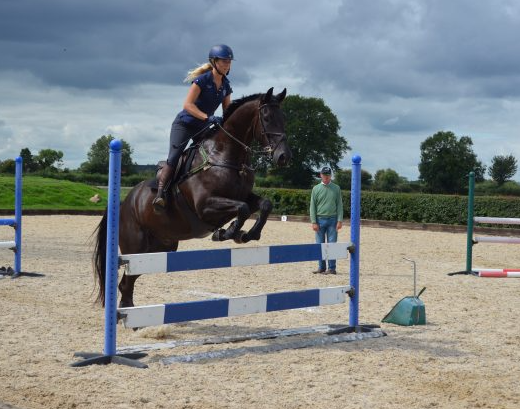
This section serves as your complete, ultimate field training manual for mastering spatial stride awareness. Every single underlying concept here is rigidly built completely around the precise definitive numbers that truthfully matter the most inside the active jumping arena. We will carefully explore the intricate mathematical geometry directly behind the horse's stride, keeping strictly in mind that a standard modern warmblood horse generally effortlessly canters at roughly 12 feet per individual stride.
To quickly formulate an accurate jumping line, you must consistently and routinely add precisely 6 feet for the initial landing phase and another strictly measured 6 feet for the subsequent takeoff phase. Consequently, calculating that daunting distance between two solid fences instantly becomes a highly reliable, proven real-world equation rather than a reckless, chaotic blind guess. Whether you are wearing high-end custom equestrian clothing during a prestigious Grand Prix or just practicing at home, the math remains exactly the same. Knowing the mechanics helps you turn a chaotic guess into calculated precision. A skilled equestrian clothing manufacturer understands the biomechanics of a rider's movement, just like a seasoned rider understands the mechanics of their horse's stride.
At its essential core, successfully "seeing a stride" means confidently accurately arriving exactly at the optimal takeoff point — which is positioned identically 6 feet (1.8–2 meters) from the solid bottom base of an average standard 3-foot jumping fence. That precise mathematical spot is the ultimate geometric sweet spot. If you gracefully land exactly there, your athletic horse reliably jumps incredibly clean, wonderfully balanced, and strictly with immense soaring confidence. If you tragically miss it — perhaps by anxiously launching deeply a full awkward stride entirely too early, or recklessly violently cramming in a desperate last-second dangerous "chip" — literally every single jumping component that follows progressively gets significantly harder.
The singular striking factor that dramatically separates ambitious recreational amateurs from deeply seasoned advanced professionals is that the seasoned professionals are never merely suddenly reacting dangerously to the upcoming solid fence. They are actively reading and continuously manipulating the forward canter momentum fully 8 strides out. They smoothly sense the rhythmic flowing pace beautifully early enough that the final jumping distance essentially sets itself naturally. Meanwhile, struggling amateurs tragically tend to only start processing the visual data a dangerously brief and frantic 3–4 strides out. While that is barely still workable, it severely leaves terribly little room for even the smallest fraction of rider error.
Properly Measuring Your Horse's Actual Natural Stride Length
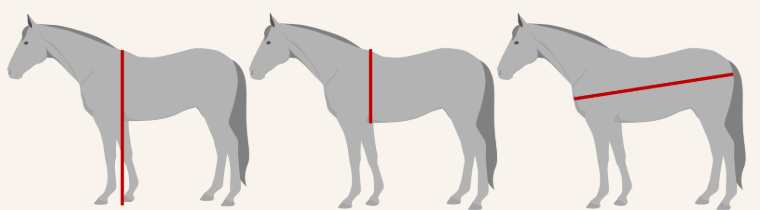
The entire jumping math framework fundamentally only works correctly if you know your exact personal numbers. Your particular horse's individual stride length parameter is comfortably unquestionably the single most absolutely important baseline metric in the entire sport of competitive show jumping. The globally established, universally accepted standard baseline average is exactly 12 feet per canter stride. Professional international course designers purposefully explicitly build almost exclusively around that single metric.
However, that magical universally accepted number is only an average, absolutely not an unbreakable concrete rule. An exceptionally muscular, tightly built 14.3-hand sturdy Quarter Horse might actively and enthusiastically cover a noticeably shorter, tighter 9–10 feet horizontally per individual canter stride. In severe stark contrast, a massively tall, long-reaching, towering 17-hand Thoroughbred cross can comfortably and distinctly push significantly well past 12 feet without breaking a single drop of sweat. Navigating demanding lines while purposefully rigorously testing and evaluating a completely unknown horse's unique cadence strongly requires extreme patience and focus. Doing so while outfitted in highly breathable premium wholesale equestrian clothing smartly sourced safely from an intensely reliable premium equestrian clothing factory tremendously helps keep your core body temperature comfortably cool.
To efficiently and accurately measure your horse's unique cadence at your own home barn, simply and confidently set up 2–3 ground poles completely parallel down the longest, flat side of your groomed riding arena on solidly level footing. Walk and trot your relaxed horse until the lively canter feels wonderfully settled and consistently solid. Then, decisively and smoothly canter right down the perfectly aligned jumping line exactly 3–5 times, carefully maintaining your forward pace firmly and absolutely flawless.
Many riding academies choose to equip their riders in a tailored custom equestrian outfit during these intensive training clinics to maintain a professional appearance. Some even launch their own private label equestrian clothing lines to foster a sense of high-performance team spirit. After finishing the laps, safely rake a visibly clean line right down into the arena sand. Take a tape measure, measure the total accumulated tracked distance covered, and properly divide that precise distance mathematically by your exact full explicit stride count. That resulting specific number is definitively your specific horse's very own authentic natural working stride.
If you shockingly have absolutely no tape measure readily available, simply walk exactly the same line yourself. Every single independent sequential ordinary casually paced individual human step of your own completely average walking path consistently and fundamentally translates naturally to mathematically around exactly 3 feet.
Walking the Course Properly and Establishing Your Base Count
Walking a full jumping course prior to mounting up isn't merely an empty warm-up ritual; honestly, it is a critical session of extensive data collection. Once you actually step into the ring strictly on foot, you are actively building a detailed mental map that your body will need to automatically execute seamlessly at the canter under intense competition pressure. Unfortunately, that mental map is truly only as good as your personal stride count.
Memorize the fundamental geometric conversion that realistically makes this entire system function: 1 human step = 3 feet (0.9 m), while exactly 1 horse canter stride = 12 feet (3.65 m), which mathematically means that precisely 4 of your steps = 1 horse stride. Executing it flawlessly in an arena takes immense discipline. You must always start squarely at the literal base of the solid jumping fence. Press your calves firmly against the robust back of the wooden fence rail and actively take 2 steps forward — that successfully marks your first 6 feet, perfectly covering the mandatory half-stride your horse automatically requires safely after landing.
This strict position becomes your permanent baseline, and every subsequent stride count unequivocally starts directly from right here. Proceed by walking the remaining line precisely in grouped counting clusters of exactly four steps, audibly whispering "one, two, three — one stride; one, two, three — two strides." Don't count the landing step as stride one. The true jumping stride actually starts strictly when the powerful sweeping hind legs physically push forward.
It’s worth mentioning that course walking is often highly televised or photographed at large regional shows. This is precisely why competitive barns often collaborate with an experienced equestrian manufacturer or established equestrian suppliers who provide extensive OEM/ODM services. Walking the lines wearing expertly fitted custom equestrian clothing not only portrays top-tier professionalism but also ensures that riders have the necessary physical flexibility to deeply bend down, analyze footing, and comfortably measure striding distances without feeling stiff or restricted by cheap fabrics.
Vital Ground-Based Exercises for Immediate Visual Correction
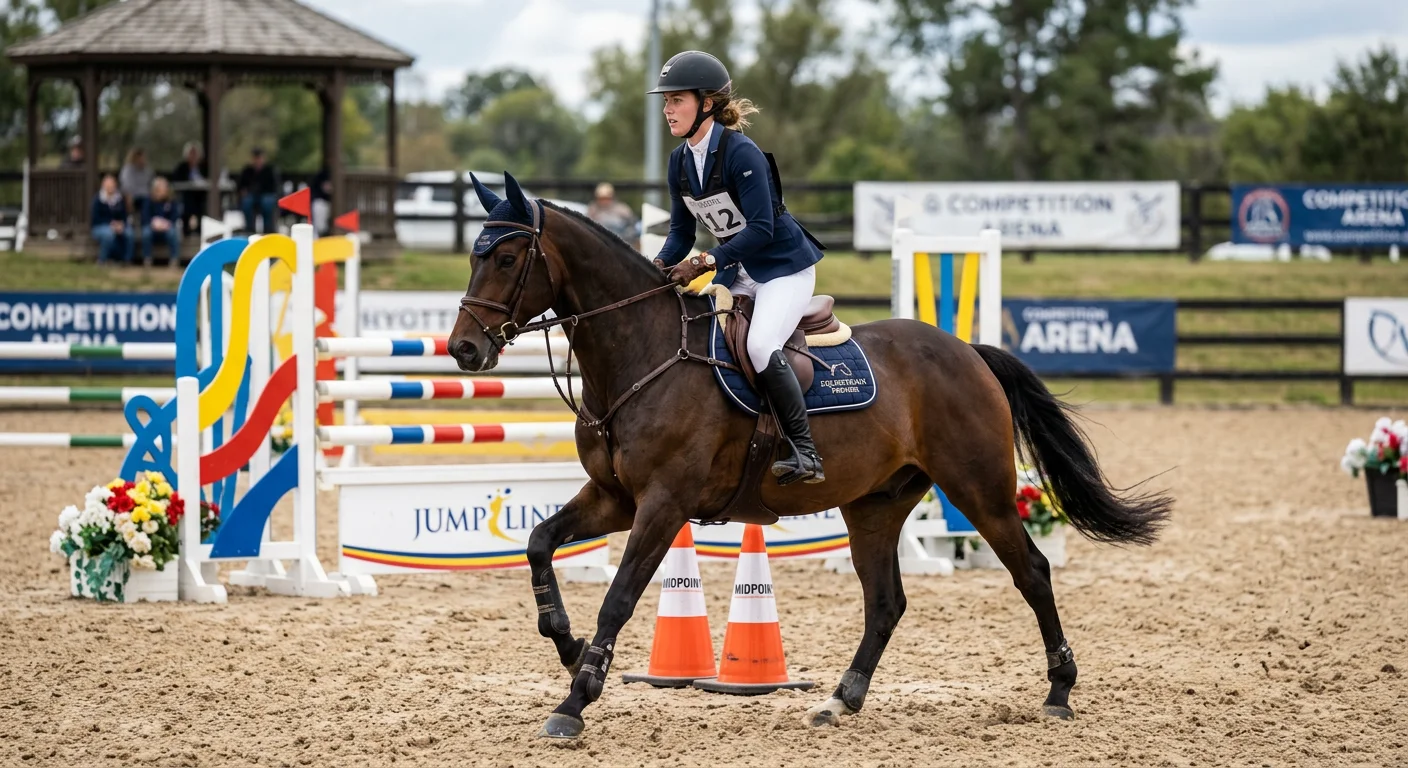
Positioning heavy ground poles directly horizontally on the arena sand is exactly where world-class elite stride awareness is originally and masterfully constructed. Start intelligently with spacing that safely matches your distinct horse's genuine natural flowing working stride seamlessly. Many professionals swear by daily pole work because it trains the human eye to recognize distances thousands of times over without ever causing unnecessary physical wear and tear on the horse's fragile front leg joints.
Set a simple line of five poles evenly spaced roughly 9 to 10 feet apart for a standard trot exercise. As you approach the poles, your goal isn't to muscle the horse into the right spot, but rather to establish an unwavering, metronomic rhythm. When the rhythm is consistently pure, the distance to the very first pole magically takes care of itself. For a canter exercise, set two poles exactly 60 feet apart. In a perfectly standard arena scenario, 60 feet equals a precise five-stride line (remember: 60 feet minus 6 feet for landing off the first pole, minus 6 feet for taking off over the second pole leaves exactly 48 feet. Divide 48 by 12, and you get exactly four strides... wait, five strides! Let's do the math correctly: landing is 6, takeoff is 6. That's 12 feet. 60 minus 12 is 48. 48 divided by 12 is 4 strides. If you want a five-stride line, you'd set the poles at 72 feet. This mathematically grounded understanding is essential).
Because these exercises involve endless repetition in all weather conditions, stocking up on durable wholesale equestrian clothing is highly recommended for daily barn wear. Furthermore, trainers who work with dedicated equestrian outfit manufacturers to produce their own private label equestrian clothing can supply their students with affordable, incredibly durable daily training gear that survives rigorous outdoor pole utility work.
Connection, Impulsion, and Canter Adjustability
You can stare at a jump all day long, but if you do not have a balanced, fully adjustable canter, you will never see a consistently good spot. Stride awareness is deeply interconnected with the level of impulsion you've actively created from the horse's hind end. A true show jumping canter feels like a tightly coiled spring. It’s distinctly bouncy, energetic, and uphill. Without it, your horse will naturally flatten out, their stride will unpredictably elongate, and your carefully mapped distances will instantly fall apart.
The primary tool for regulating this energy is the half-halt. Properly executing a half-halt briefly balances the horse back onto their hindquarters while simultaneously maintaining the forward energy. By practicing extending the canter down the long side of the arena and heavily collecting it through the short corners, you give yourself the physical "gears" necessary to adjust your stride length when you visually recognize that you are slightly too long or too deep to a fence. Finding an experienced equestrian clothing manufacturer capable of creating high-stretch riding breeches is vital here, as your core muscles and seat bones constantly engage and release during these microscopic canter adjustments.
Your ability to sit deeply and quietly in the saddle without disturbing the horse's mouth while applying these half-halts is heavily influenced by the tailoring of your gear. Modern equestrian clothing manufacturers construct jackets and breeches with four-way stretch fabrics that move organically with your pelvis. Choosing premium custom equestrian apparel isn't vanity; it's a structural requirement for allowing maximum physical adjustability in the saddle.
Upgrading Your Visual Focus and Eye Control
Probably the most common mistake struggling jumpers make is dropping their eyes down directly to the base of the jump as they approach. The human body is built so that wherever your eyes focus, your shoulders naturally follow. When you look down at the dirt, your upper body tips forward, shifting your center of gravity drastically over the horse's fragile front shoulders. This abruptly heavily alters their balance and completely ruins the stride you worked so hard to establish.
Instead, intentionally train your eyes to gently look softly at the top rail of the jump when you are turning the corner. As you get closer—roughly three strides away—your gaze should physically lift and smoothly look past the current jump entirely, shifting focus to something far off in the background or towards the very next obstacle on course. This elevated physical posture keeps your chest powerfully open and your shoulders properly aligned back.
To execute this properly, riders need total freedom of movement in the neck and shoulders. Trying to maintain rigid upper-body posture in poorly designed, stiff clothing is a nightmare. This is why investing in a finely tailored custom equestrian outfit is so beneficial. Quality brands specializing in high-end custom equestrian clothing ensure the collar and shoulder seams never restrict your neck rotation. This allows your panoramic visual tracking to seamlessly flow from one side of the course directly to the other. High-tech garments born out of advanced OEM/ODM services from top-tier factories actively enhance rider aerodynamics and visual comfort.
Gear, Preparation, and Running a Competitive Team
Show jumping at an elite level is a serious undertaking that involves far more than merely steering a horse towards a wooden obstacle. For barn owners, professional trainers, and ambitious competitive teams, meticulous background preparation ultimately separates the amateur operations from the highly elite ones. A huge part of that intensive preparation involves intelligently curating the right equipment and apparel. Your team's visual aesthetic actively influences the psychological confidence they naturally carry into the stressful show ring.
This is precisely why elite programs dedicate time to researching premium equestrian suppliers who explicitly understand the extreme athletic demands of the sport. Partnering directly with specialized equestrian outfit manufacturers allows barn managers to confidently source completely unified team apparel. By leveraging the comprehensive OEM/ODM services offered by a top-tier equestrian clothing manufacturer, academies can design gear tailored perfectly to their local climate and specific riding style.
Whether you need lightweight, UV-blocking summer competition shirts or insulated winter breeches for your team, reputable equestrian manufacturers can seamlessly bring your vision to life. Launching an exclusive line of private label equestrian clothing for your stable not only organically builds robust team unity, but it also creates a highly lucrative secondary revenue stream for your business. When your entire stable turns up to course-walk wearing matching, precisely tailored custom equestrian clothing, it sends a distinctly commanding message of deep professionalism to the judges and competitors alike.
At the end of the day, successfully finding the perfect distance to a complicated obstacle requires relentless discipline, precise mathematical calculation, and a relaxed, deeply focused mind. When you equip yourself and your team with comfortable, beautifully built high-end custom equestrian clothing or carefully source durable wholesale equestrian clothing for daily home practice, you organically strip away all the physical discomforts and distractions. The perfect custom equestrian outfit frees you to solely concentrate on actively counting your strides, managing your horse's unique impulsion, and confidently riding flawlessly to the base of the jump.