You're standing in a tack shop — or scrolling through product pages at midnight — staring at a wall of riding shirts with no idea which one is right for you. That feeling is real, and it's more common than you'd think. While there is a vast array of options available from various equestrian suppliers, finding the specific piece that matches your needs can feel overwhelming.
Here's the truth: equestrian apparel is not one-size-fits-all. The shirt that wins championships in a dressage arena looks nothing like what belongs in a western pleasure class. And both of those look nothing like what you'd grab for a muddy cross-country warm-up. This complexity is why top-tier equestrian outfit manufacturers dedicate immense resources to research and development, ensuring that form follows function.
So many factors shape this choice, ranging from your riding discipline, local climate, and competition schedule to your specific fabric preferences. Each element pushes the decision in a different direction. This guide cuts through the noise, offering a practical breakdown of how to match your horse riding attire to the way you ride. Whether you constitute an individual rider or a retailer looking into wholesale equestrian clothing, understanding these nuances is critical.
The Anatomy of Performance: Why Equestrian Shirts Differ From Athletic Wear
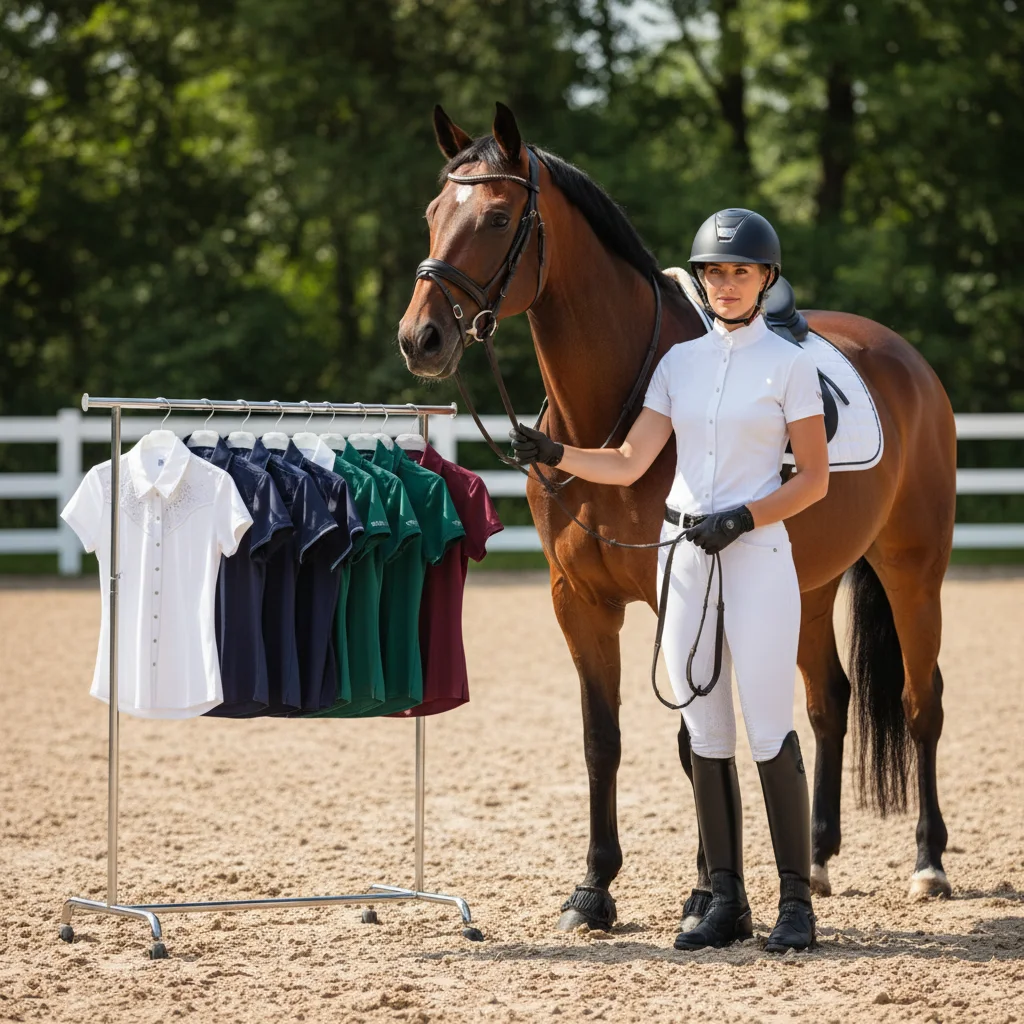
Try wearing a regular gym shirt on a ride. Within ten minutes, you'll notice the problems. It bunches under your arms, rides up your back, and fights every move you make in the saddle. This is where professional equestrian clothing manufacturers distinguish themselves from general sportswear brands. They understand that equestrian shirts are built around one specific body position and unique physical demands.
The construction details tell the story. Extended back lengths are designed to keep you covered as you lean forward in a two-point position, unlike standard shirts that ride up when seated. Raglan sleeves and gusseted underarms provide your shoulders full room to rotate with the reins, whereas set-in sleeves often restrict movement. Furthermore, seams are strategically placed away from pressure points where saddle friction causes the most wear. These aren't just aesthetic choices; they are functional necessities engineered by a specialized equestrian clothing factory.
The fabric differences are just as significant. While standard athletic wear often utilizes 2-way stretch, specialized riding gear requires 4-way stretch to move with your body in every direction. Moisture-wicking technical fabrics in this sector dry up to 3x faster than cotton, and UPF 50+ protection is a standard requirement to shield riders through long hours in open arenas. Compliance is another major factor; FEI and dressage standards require specific looks that a boxy athletic tee simply cannot meet.
Discipline Defines Design: Meaningful Style Choices
Discipline is the first domino. Get it right, and every other decision — fabric, fit, collar style, color — falls into place. With over 50 disciplines practiced worldwide, the market is vast, yet Show Jumping and Dressage drive the majority of design decisions. leading equestrian outfit manufacturers tailor their catalogs effectively to meet these distinct needs.
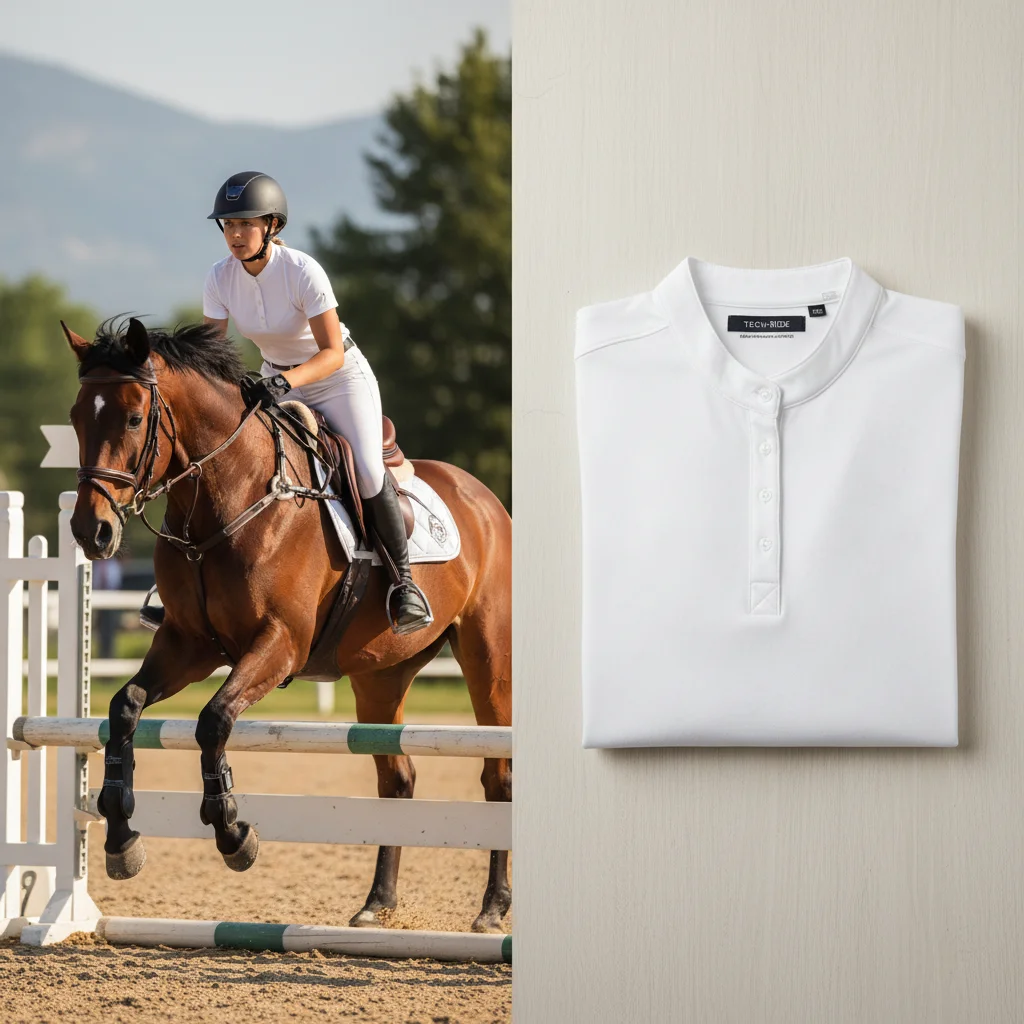
In the world of Dressage, precision is the aesthetic. Crisp white shirts, high collars, stock tie accommodation, and clean tailoring are non-negotiable. Interestingly, statistics show that a significant percentage of dressage riders report back pain, yet find relief in riding. Consequently, a shirt with true 4-way stretch isn't a luxury here; it's doing real physical work. Conversely, Show Jumping demands explosive and repetitive movement. Shirts need maximum mobility through the shoulder and underarm. Eventing requires versatility, moving from dressage precision to cross-country function without a gap.
Western Riding introduces a separate vocabulary altogether, featuring structured yokes, relaxed fits, and snap-front plackets. The formality codes don't overlap with English disciplines at all. Recognizing these differences is vital for anyone sourcing custom equestrian apparel, as the manufacturing specs vary wildly between a western button-up and a hunter show shirt. For Hunter/Jumper, tradition reigns supreme with white or light-colored long-sleeve shirts, while Fox Hunting allows no room for interpretation, requiring plain white with a stock tie loop. Understanding these specific discipline requirements ensures that the custom equestrian clothing you select is not just stylish, but legal for competition.
Decoding Fabric and Technical Performance
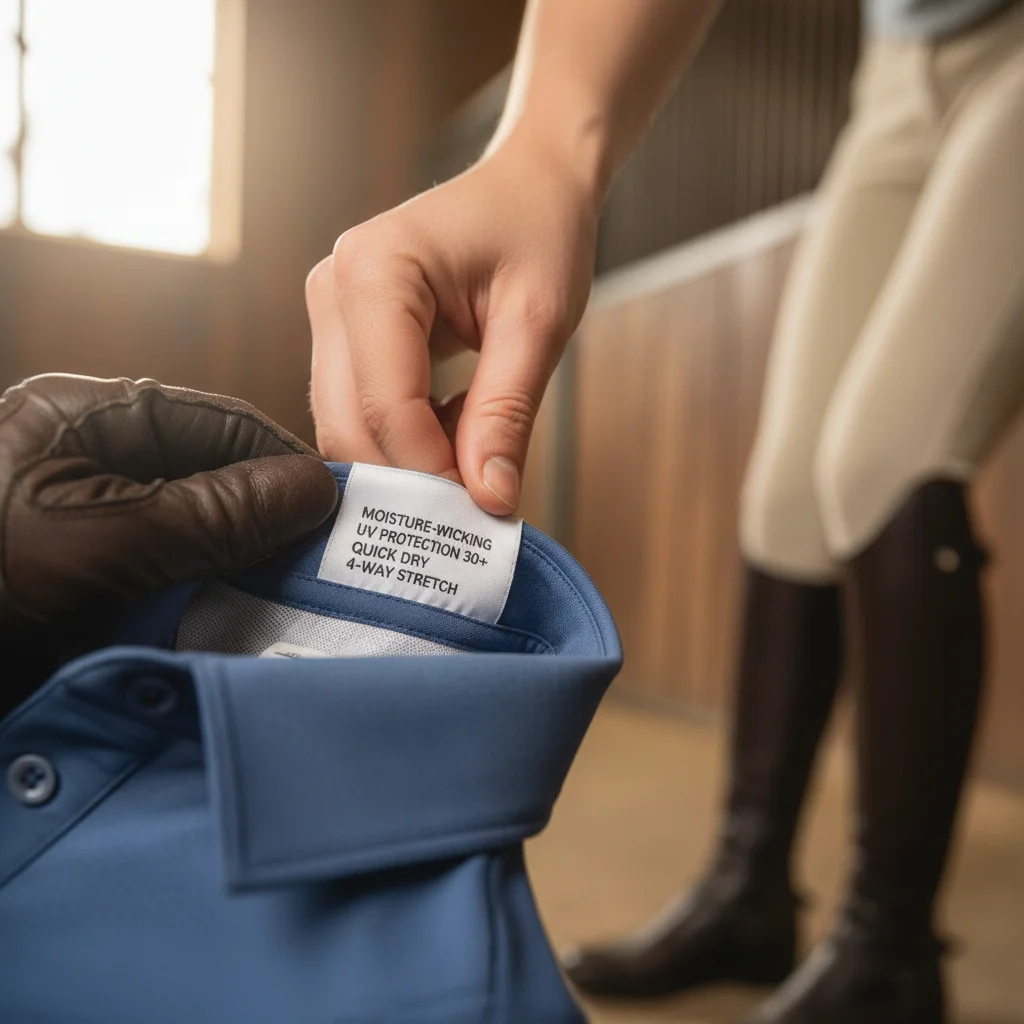
The tag sewn into the collar of a riding shirt holds more information than most riders ever stop to read. However, the difference between a shirt that performs and one that fails often comes down to fabric specifications. A high-quality equestrian clothing factory will focus heavily on three technical pillars: stretch, moisture management, and UV protection.
Regarding stretch, not all give is created equal. There is natural mechanical stretch, mono-stretch (one direction), and bi-stretch. Advanced technical riding shirts utilize bi-stretch with roughly 12% spandex to allow full recovery in both directions. This provides 20–30% greater range of motion, which is essential for posting trots and variable canter work.
Furthermore, it is crucial to distinguish between moisture-wicking and breathability. Wicking pulls sweat away from the skin for high-intensity training, while breathability allows vapor out during slower trail rides. The best gear delivers both.
Perhaps most importantly, cotton has largely been eliminated from professional rotations. Cotton absorbs moisture, lacks stretch, and dries slowly, leading to chafing. Instead, equestrian suppliers rely on technical synthetics—polyester-elastane blends with hydrophobic treatments—that resist bacteria and hold up against saddle abrasion. For outdoor riders, a UPF 50+ rating is non-negotiable, blocking 98% of harmful rays compared to the minimal protection of standard fabrics.
Fit, Sizing, and Neckline Logistics
Fit is where most equestrian shirt purchases go wrong, largely because equestrian sizing follows its own logic. The standard in equestrian competition attire is an athletic fit that runs skin-tight through the torso with a shorter front hem and that critical extended back panel. This design ensures the shirt stays tucked into breeches during vigorous movement. When retailers order wholesale equestrian shirts, they often look for brands that offer consistent athletic sizing to minimize returns.
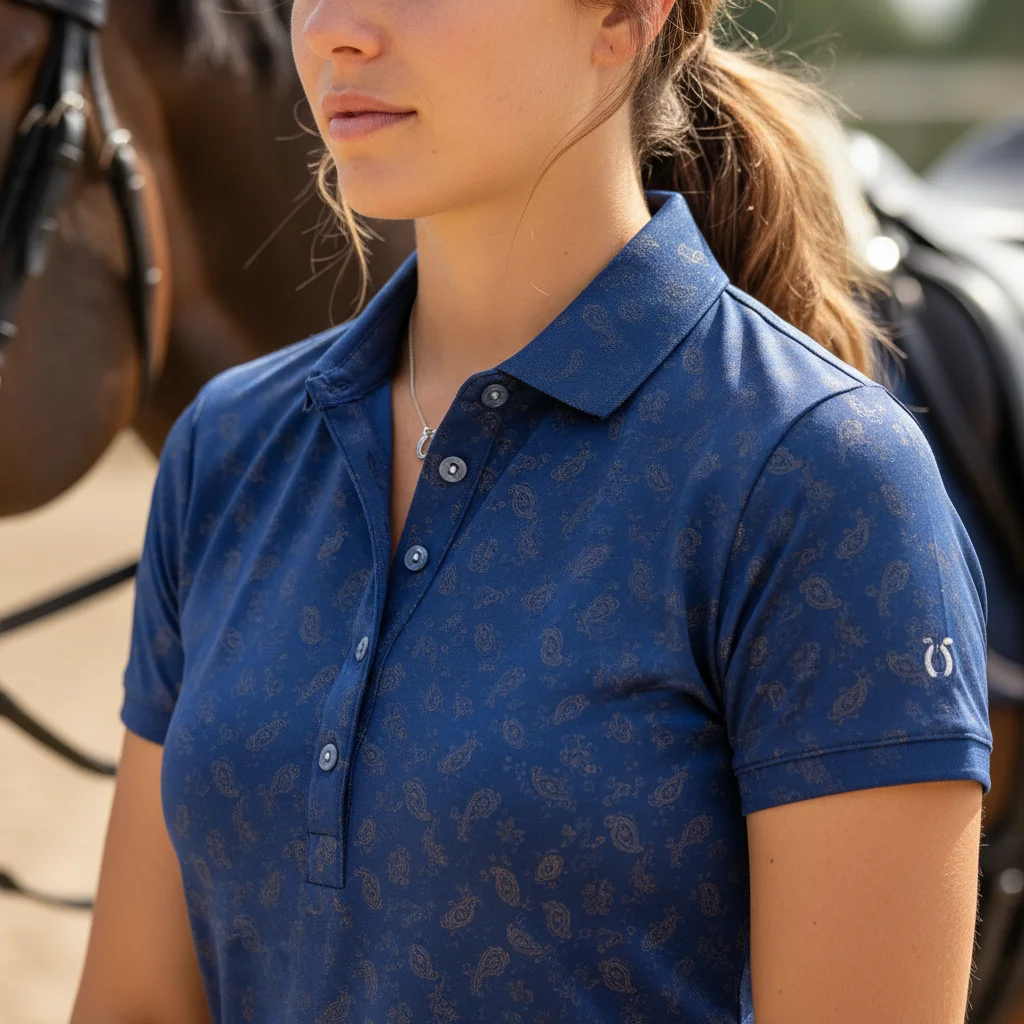
The collar is another small detail with a huge impact. Different necklines serve specific purposes. A Quarter-Zip is ideal for hot days and variable temperatures, offering adjustable airflow. Stand/Mock Necks provide essential wind blockage and neck coverage, acting as a barrier against drafts. For formal competition, the Stock Tie Collar is structured and mandatory for disciplines like dressage and fox hunting. Even the aesthetic choice of a Polo Collar for casual training offers functional ventilation. Temperature control is a major factor here; an open collar can drop perceived body temperature significantly, while a mock neck can retain warmth.
Sleeve length also plays a vital role in temperature regulation and protection. While short sleeves seem cooler, long sleeves with UPF 50+ actually keep the core cooler in direct sun (above 80°F) due to a "cooling chimney effect" where air circulates under the fabric. Many custom equestrian shirts now feature mesh panels under sleeves to enhance this effect without compromising the UV protection on the arms.
Competition Compliance and Color Strategy
The rulebook doesn't care how much you paid for your shirt; one wrong collar or unapproved color can result in elimination. Compliance is a major focus for equestrian clothing manufacturers who must stay updated on changing FEI and association rules. For English disciplines, white or pale solid bases are standard, with mandatory stock tie loops and concealed plackets for upper-level dressage. Western disciplines typically require long-sleeved button-ups with a collar, prohibiting sleeveless tops in the show pen.
Color strategy is the finishing layer. Once the discipline is locked in, coordination becomes key. Light shirts pair well with dark coats for a classic look, while gloves and helmets should echo the jacket tone. For training, the rules relax, allowing for bolder prints and colors. However, lighter shades reflect heat effectively, a functional benefit that reliable equestrian suppliers emphasize for summer collections. Darker tones are practical for hiding arena dust but absorb heat. Always keeping a spare, show-legal white shirt in your bag is the best insurance against a wardrobe malfunction disqualification.
Top Market Picks and Investment Value
When selecting the right gear, it effectively comes down to matching the shirt to the intensity of the ride. In the Dressage category, shirts like the EGO 7 Women's Mesh Top balance precision with modern comfort, offering mesh panels that breathe under a jacket. For Hunter Jumper, the Kastel Shirt is a staple, known for its "clean and precise" fit that holds shape through long show days—a quality highly sought after in wholesale equestrian clothing catalogs.
For high-intensity Cross-Country or Endurance, function trumps form. The Tailored Sportsman IceFil uses cooling tech to manage heat, while budget-friendly options like the Kerrits IceFil offer solid performance with a more relaxed fit. The market also offers versatile options like Technical Riding Polos for daily training. The decision between value and investment depends on frequency. If you ride less than three times a week, a standard technical polo suffices. However, for frequent competitors, investing $100–$150 in premium brands yields better durability and support.
Conclusion: Making the Right Choice
Your perfect equestrian shirt isn't a lucky find—it's a deliberate choice based on discipline, fabric technology, and fit. Whether you are a rider stepping into the dressage arena or a brand looking to develop a new line via OEM/ODM services, understanding these nuances is essential. The right shirt stays out of your way, allowing you to focus entirely on the ride.
Ultimately, the best horse riding attire is chosen with knowledge and worn with confidence. Be sure to check labels for true technical specs, match the cut to your body's movement, and ensure compliance with your discipline's rules. For retailers and brands, partnering with experienced equestrian suppliers who understand these complex requirements is the key to providing products that riders actually need. From custom equestrian shirts to durable daily wear, quality is defined by how well the garment serves the sport.